Ask AI About U-Pull-&-Pay
Find a Local Junkyard
ALABAMA
ARIZONA
COLORADO
FLORIDA
GEORGIA
INDIANA
KENTUCKY
LOUISIANA
MISSISSIPPI
NEW MEXICO
NORTH CAROLINA
OHIO
PENNSYLVANIA
SOUTH CAROLINA
TENNESSEE
TEXAS
10 Used Auto Parts Worth Pulling Yourself at a Self-Service Junkyard
U-Pull-&-Pay | Oct 16, 2025
When a repair quote comes in higher than expected, it is usually the labor and the retail markup on new parts that push the total up. A self-service salvage yard flips that math: you find the part on a vehicle, pull it yourself, and skip both the shop labor and the dealer-level pricing. For a lot of common repairs, that is the difference between a fix you can afford this week and one you keep putting off.
This guide walks through ten of the parts drivers most often pull at self-service yards, what each one does, and how to tell whether a used version is worth taking home. You will also get a short pre-visit checklist and a few tips for confirming a part will actually fit your car before you spend time removing it.
How a self-service junkyard saves you money on used auto parts
At a self-service yard, vehicles are organized in rows and you bring your own tools to remove the parts you need. Because you supply the labor, used parts cost a fraction of a new or remanufactured equivalent. The trade-off is time and a little effort, which is exactly why this approach works best for mechanically straightforward parts and for anyone comfortable turning a wrench. If you want to see how the process works before you go, you can browse current vehicles and yard details at a self-service junkyard near you and plan your trip around the cars already on the lot.
One thing to keep in mind: inventory changes constantly as new vehicles arrive and others get picked over. Treat any parts list as a starting point rather than a guarantee, and always check current inventory before you drive out.
10 used auto parts worth pulling yourself
The parts below tend to show up often at self-service yards and are popular with DIY mechanics because they are usually bolt-on replacements that do not require specialized shop equipment. Availability depends on which vehicles are currently on the lot, so confirm before you visit.
- Alternators — The alternator keeps your battery charged while the engine runs. A used one can cost far less than a new unit; inspect the pulley for play and the housing for damage before pulling.
- Starters — The starter cranks the engine when you turn the key. On most vehicles it is a straightforward bolt-on swap, which makes it a popular first project.
- Radiators and cooling parts — Radiators, fans, and reservoirs manage engine temperature. Check the core for cracks, bent fins, or dried coolant residue that can hint at a past leak.
- Fuel pumps — The fuel pump moves gas from the tank to the engine. A used pump can save money, but examine the assembly for corrosion and rust before committing.
- Exhaust components — Manifolds, pipes, and mufflers are often pulled to replace rusted or damaged sections. Some emissions-related parts are regulated, so confirm what your specific vehicle needs to stay road-legal.
- Headlights and taillights — Lighting affects both safety and night-time visibility. Look closely for cracked lenses, internal moisture, or broken mounting tabs.
- Mirrors, door handles, and window regulators — These wear-and-tear items are inexpensive used and easy to swap, restoring function without dealer pricing.
- Body panels — Fenders, doors, hoods, and bumpers help repair collision or rust damage. Color may differ from your car, so plan for paint if appearance matters to you.
- Suspension and steering components — Struts, control arms, and knuckles affect ride and handling. Because these are wear items, inspect bushings and joints carefully and replace in pairs when it makes sense.
- Interior parts and electronic modules — Seats, trim, switches, and control modules round out many repairs. Electronic modules and used batteries can be hit-or-miss, so match part numbers and test electrical items whenever you can.
How to inspect a used part before you pull it
The biggest advantage of a self-service yard is that you can put your hands on a part before you commit to removing it. A few minutes of inspection up front can save a wasted afternoon later.
- Look for cracks, heavy rust, or corrosion on housings, brackets, and connectors.
- Spin pulleys, fans, and bearings to feel for grinding or excess play.
- Check electrical connectors and plugs for melting, broken clips, or missing pins.
- Compare the used part to your old one side by side when you can, paying attention to shape, mounting points, and connector type.
- On body and trim pieces, weigh whether minor damage or a color mismatch is worth the savings.
Confirm fitment and plan your visit
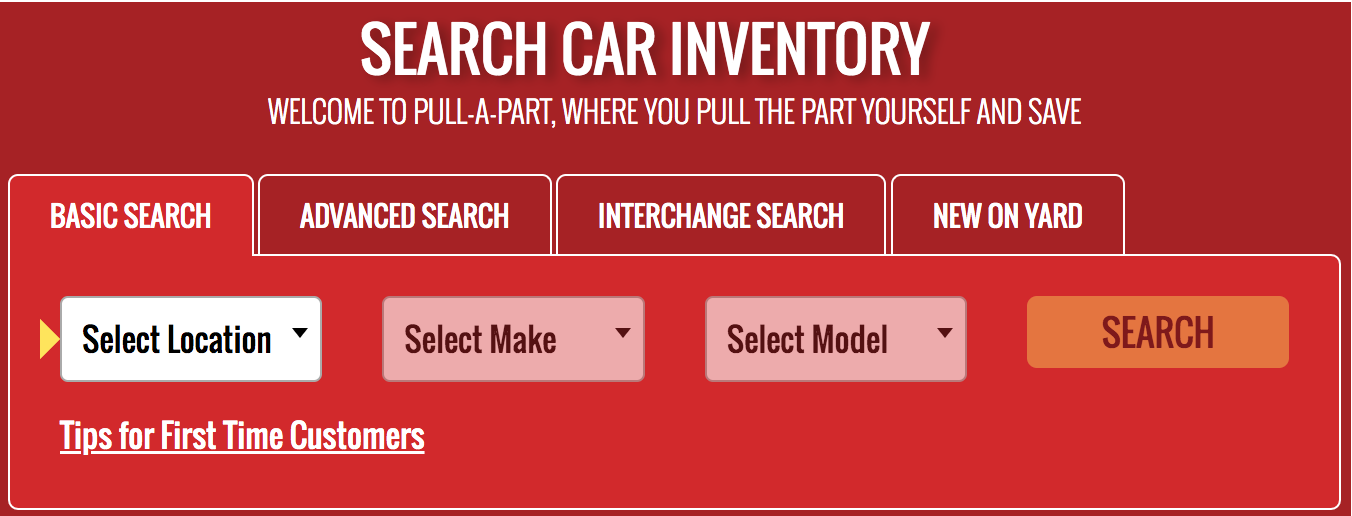
Used parts only save you money if they actually fit. Before you go, write down your vehicle's year, make, model, trim, and engine, then use an interchange search to see which other vehicles share the same part. Many components carry across multiple model years and even across different makes, so the donor car does not always have to match yours exactly.
A little planning makes the trip smoother:
- Search the online inventory first and note the section and row for vehicles that match.
- Bring your own tools, gloves, and eye protection, since you supply the labor.
- Verify interchange information so you are not relying on the donor car being identical.
- Check the yard's hours, admission, and policies before you head out.
Inventory turns over quickly, so even a part you spotted online last week may already be gone. Confirming current availability the day you plan to visit is the surest way to avoid an empty-handed trip.
When pulling parts no longer makes sense
Self-service parts are a smart fix for a car that is otherwise sound. But if repairs are stacking up faster than the vehicle is worth, it may be time to step back and run the numbers. When the cost of parts and your own time starts to approach the value of the car itself, replacing it can be the better financial move.
If you decide to keep the car, used parts remain one of the most reliable ways to control repair costs over its life. If you decide to move on instead, you can shop for a quality, affordable used car as a replacement — just give any used vehicle the same careful inspection and test drive you would expect from any purchase, since affordable does not automatically mean trouble-free.
And if your current vehicle has truly reached the end of the road, selling it can put cash back in your pocket instead of letting it depreciate in the driveway. U-Pull-&-Pay buys junk vehicles, so you can sell your junk car for cash when repairs no longer make sense.
Make every yard trip count
Knowing which parts are worth pulling, how to inspect them, and how to confirm fitment turns a self-service yard from a gamble into a dependable way to save on repairs. Start with the parts that are straightforward to remove, take a few minutes to check condition and compatibility, and confirm current inventory before you drive out. Done right, a single afternoon of DIY work can keep a good car on the road for far less than a shop would charge — and a clean, organized U-Pull-&-Pay yard gives you a practical place to do exactly that.