Ask AI About U-Pull-&-Pay
Find a Local Junkyard
ALABAMA
ARIZONA
COLORADO
FLORIDA
GEORGIA
INDIANA
KENTUCKY
LOUISIANA
MISSISSIPPI
NEW MEXICO
NORTH CAROLINA
OHIO
PENNSYLVANIA
SOUTH CAROLINA
TENNESSEE
TEXAS
What to Know Before Buying a Used Car from a Self-Service Junkyard
U-Pull-&-Pay | Jul 13, 2025
A car that runs for a few hundred dollars sounds almost too good to be true, and that promise of rock-bottom prices is exactly what draws budget shoppers to self-service junkyards and salvage yards. If money is tight, a salvage-connected car can be one of the cheapest ways to get behind the wheel. But buying a used car this way is nothing like walking onto a dealer lot, and the gap between a smart buy and an expensive mistake almost always comes down to what you check before you pay.
This guide explains what really happens when you shop for a budget car tied to a self-service junkyard: which vehicles are actually for sale, how to inspect one without specialized tools, how to set a realistic budget, what paperwork you'll need, and how to keep the car running once it's yours. By the end, you'll be able to tell a genuine bargain from a money pit.
Can You Actually Drive a Car Out of a Junkyard?
Here's the part most guides skip. The vehicles parked in the rows of a self-service or "pull-your-own-parts" yard are usually there to be dismantled, not driven away. They've reached the end of their road life, and the yard sells their components — engines, doors, alternators, seats — to people repairing other cars. Those vehicles generally are not sold as roadworthy transportation, and many couldn't pass an inspection or even start.
That doesn't mean an affordable, drivable car is out of reach. Some operations sell complete running vehicles separately from their parts inventory, and those cars are typically cleaned up, checked over, and priced for the road. U-Pull-&-Pay, for example, offers quality, affordable used cars for sale in participating markets, separate from the self-service parts yard. Knowing which type of vehicle you're looking at — a parts car or a sale-ready used car — is the first thing to confirm, because it changes everything about how you evaluate and buy it.
Why a Salvage-Source Car Can Save You Money — and Where the Risk Lies
Saving money is the whole point, so it helps to understand where the savings come from and what you trade for them. Inexpensive cars tied to the salvage world often carry higher mileage, cosmetic damage, or a branded title. Understanding title status is essential before you commit, because it affects price, insurance, financing, and resale.
A clean title means the vehicle has never been declared a total loss. A salvage title means an insurer wrote the car off, usually after a serious accident, flood, or theft recovery. A rebuilt or reconstructed title means a salvage vehicle was repaired and passed a state inspection to legally return to the road. Branded-title cars cost less up front, but they can be harder to insure, finance, and resell later. The rules that govern salvage and rebuilt titles vary from state to state, so always confirm a vehicle's title status in writing and weigh the lower price against those long-term tradeoffs.
Used Car Inspection Checklist for a Junkyard or Salvage Find
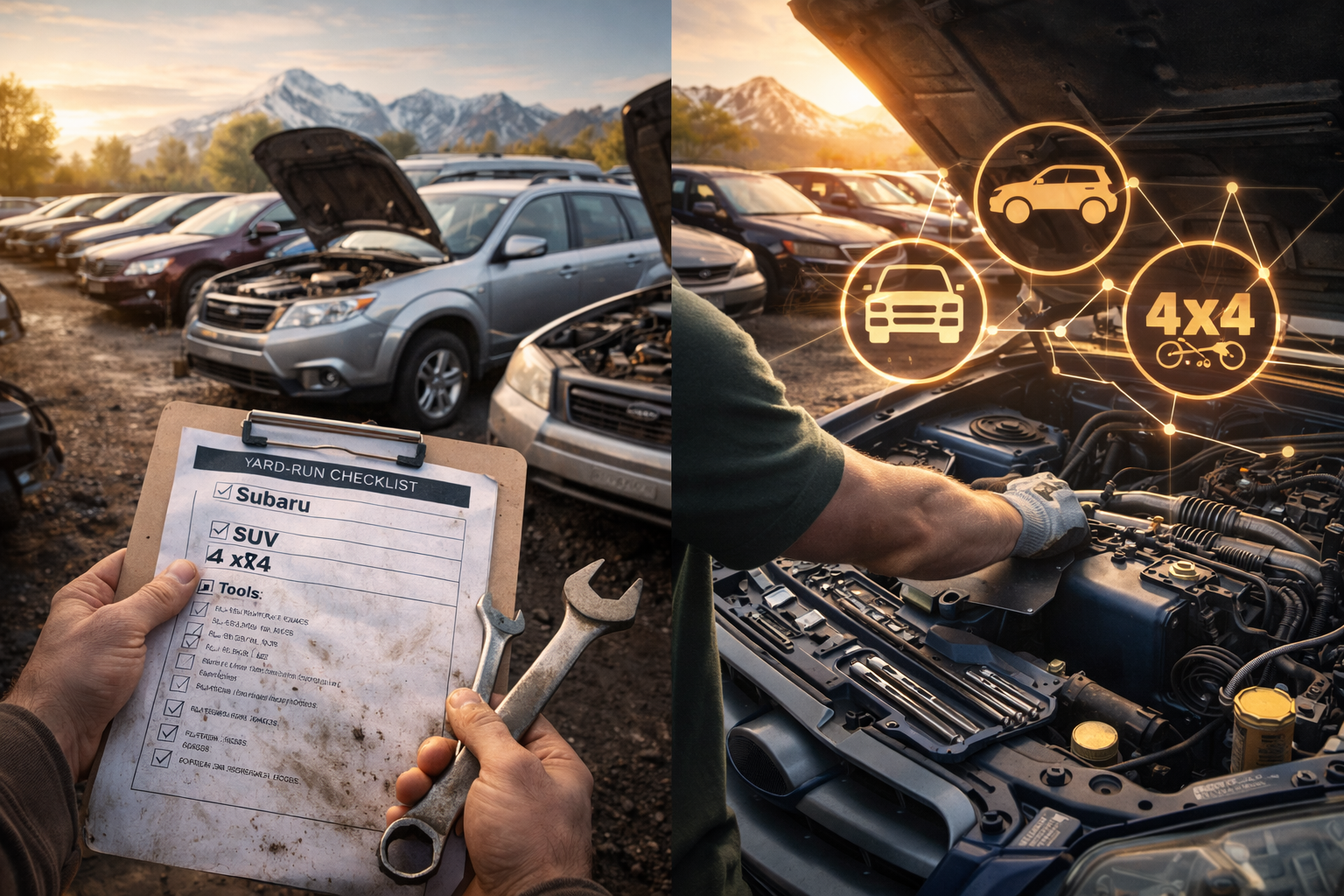
Whether you're looking at a sale-ready car or weighing a project vehicle, a careful inspection is your best protection. You don't need to be a mechanic — you just need to be thorough and unhurried. Work through this checklist before any money changes hands:
- Frame and body: Look underneath and along the panels for rust, fresh welds, mismatched paint, or ripples that hint at past collision or frame damage.
- Engine bay: Check for oil sludge, corroded battery terminals, cracked belts and hoses, and any smell of burnt oil or coolant.
- Fluids: Pull the oil and transmission dipsticks. Milky oil can signal a blown head gasket, and dark, burnt-smelling transmission fluid is a warning sign.
- Leaks: Look under the car for fresh puddles or drips of oil, coolant, or transmission fluid.
- Tires and brakes: Check tread depth, uneven wear that can point to alignment or suspension trouble, and how much brake pad is left.
- Electrical and interior: Test the lights, windows, wipers, heater, and air conditioning, and watch for dashboard warning lights that stay on.
- VIN and title: Make sure the VIN on the dashboard matches the door jamb and the title, then run a vehicle history report.
- Test drive: If the car runs, listen for knocks or grinding, feel for rough or delayed shifting, and test the brakes and steering at low speed.
Bring the Right Tools and a Second Opinion
A flashlight, gloves, a tire-tread gauge, and an inexpensive OBD-II scanner make a basic inspection far more revealing, and a small magnet can help detect body filler hiding rust or repairs. If you're not confident judging a car's mechanical condition, bring a trusted mechanic or a knowledgeable friend. A short second opinion before you buy is far cheaper than discovering a major problem afterward.
Setting a Budget and Negotiating Smart
The biggest mistake budget buyers make is spending their entire budget on the purchase price. The sticker is only one part of the cost. Plan for the full picture:
- The purchase price itself
- Immediate repairs the inspection revealed
- Title, registration, taxes, and fees
- Insurance, which can be higher on a branded-title car
- A small reserve for the unexpected
Before you negotiate, look up what comparable vehicles sell for in your area so you know whether a price is fair. Then use the specific issues you documented during the inspection — worn tires, a leak, a needed sensor — as concrete reasons to ask for a lower price rather than haggling on feel alone. Be polite, be specific, and be genuinely willing to walk away. On a budget car, the deal you don't make can save you more than the one you do.
Paperwork, Titles, and Closing the Deal
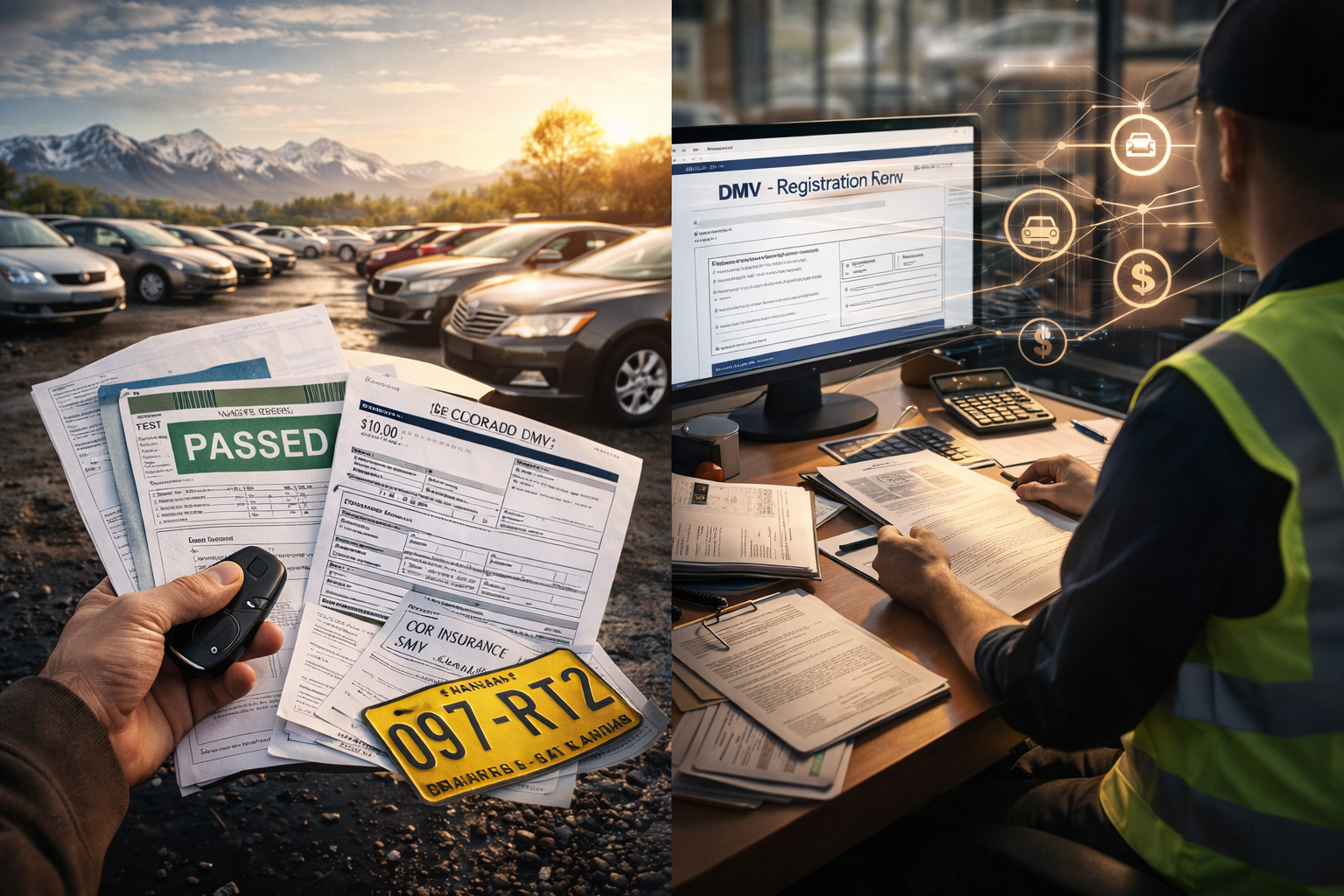
Once you've settled on a car, finishing the sale correctly protects you from headaches down the road. Bring a valid photo ID and your method of payment, and confirm in advance what the seller accepts. The most important document is the title: it should be properly signed over to you, with an accurate odometer reading recorded, and your name should match across every form. A written bill of sale that lists the price, date, VIN, and both parties' names gives you and the seller a clear record.
Title transfers, registration, odometer disclosure, and the extra steps required for salvage or rebuilt vehicles are all governed by state rules, and those rules differ depending on where you live. Because requirements and fees vary, confirm the current process and paperwork with your own state's motor-vehicle agency — depending on the state, that office may be called the DMV, BMV, MVD, Department of Revenue, Secretary of State, or another name — before you finalize anything. This article is general guidance, not legal advice, so when a step is unclear, check directly with the official agency in your state.
If buying a replacement means you finally have an old, broken-down car taking up space, you don't have to let it sit. You can often get cash for your car and put that money toward the vehicle you actually want to drive.
After You Buy: Maintenance That Protects Your Investment
A budget car rewards a little ongoing attention. Even if it drives well today, schedule basic preventive care early: change the oil, inspect belts and hoses, replace worn filters, and check the spark plugs and brake pads, since these wear items are common on higher-mileage vehicles. Listen for new noises, watch for fluid drips, and address small issues before they grow into expensive ones.
One of the quiet advantages of buying budget transportation is that repairs can stay affordable too. When something needs replacing, a trip to a self-service junkyard often lets you pull the same part for a fraction of the retail price. Inventory turns over constantly, though, so check the current online vehicle listing for your year, make, and model before you drive out, and verify the part's interchange details so it fits the first time.
Is a Junkyard Used Car Right for You?
Buying a used car connected to a self-service junkyard can be a genuinely smart move for a patient, hands-on buyer who is willing to inspect carefully, budget for repairs, and verify a vehicle's title before paying. It's a harder fit for anyone who needs a worry-free car immediately or can't take on minor maintenance. The good news is that the same skills — thorough inspection, honest budgeting, and clean paperwork — protect you whether you end up with a project car, a sale-ready used vehicle, or simply a stronger sense of what your money should buy. Take your time, trust what you find under the hood, and you can drive away with real savings instead of an expensive surprise.