Ask AI About U-Pull-&-Pay
Find a Local Junkyard
ALABAMA
ARIZONA
COLORADO
FLORIDA
GEORGIA
INDIANA
KENTUCKY
LOUISIANA
MISSISSIPPI
NEW MEXICO
NORTH CAROLINA
OHIO
PENNSYLVANIA
SOUTH CAROLINA
TENNESSEE
TEXAS
How to Save Money on Car Repairs With Junkyard Auto Parts
U-Pull-&-Pay | Aug 1, 2025
A failed alternator or a cracked taillight shouldn't mean a four-figure repair bill. New replacement parts carry retail markups, and shop labor adds up fast. One of the most reliable ways to lower the cost is to buy the same component used and install it yourself. That's exactly what a self-service salvage yard is built for: you find the part, you pull it, and you skip the markup and the labor charge.
This guide walks through how to use junkyard auto parts for DIY repairs without getting burned. You'll learn why used parts cost so much less, which parts are smart to buy secondhand, how to confirm a part will actually fit your vehicle, how to inspect it before you pay, and how a typical self-service visit works from start to finish.
Why Junkyard Auto Parts Cost So Much Less
A self-service junkyard buys end-of-life vehicles, drains and processes the fluids, and then makes the cars available for customers to remove parts directly. Because you do the labor of locating and pulling the component, the price reflects the part itself rather than a retailer's markup or a mechanic's shop rate. The same alternator, door handle, or headlight assembly that costs a premium new can often be had for a fraction of that price used.
There's a second, quieter benefit: reuse. Every part that comes off a salvage vehicle and goes back into service is one less part that has to be manufactured and one less car sitting in a landfill. For budget-minded owners, the appeal is mostly financial, but the environmental upside is real.
The trade-off is that inventory is never guaranteed. Yards take in different vehicles every week, and a car that's on the lot today may be picked over or crushed next month. Treat availability as a moving target, and confirm what's actually in stock before you make the drive.
Which Parts Are Smart to Buy Used
Some components hold up well as salvage parts and are easy to remove with basic hand tools. Others are riskier secondhand. Knowing the difference saves you both money and frustration.
Parts that are generally good candidates for the junkyard:
- Body and trim pieces such as doors, fenders, bumpers, mirrors, and door handles, where condition is mostly visible at a glance
- Lighting assemblies like headlights, taillights, and turn signals, as long as the lens and housing are intact and the wiring connector is undamaged
- Interior pieces such as seats, trim panels, knobs, and switches
- Mechanical hard parts like alternators, starters, and A/C compressors, which can offer a lot of remaining life from a low-mileage donor car
- Glass, wheels, and brackets that rarely wear out on their own
Parts to think twice about, or to test carefully before buying:
- Wear items like brake pads, belts, and filters, which are inexpensive new and often worn on a salvage car anyway
- Electronics and sensors that may need to be programmed or matched to your specific vehicle
- Anything safety-critical, such as airbags or restraint components, which can have hidden deployment or recall history
- Catalytic converters, which are heavily regulated. Whether you can buy, sell, or reuse one varies by state, so confirm the rules with your own state's motor-vehicle or environmental agency before counting on a salvage converter
Verify the Part Will Actually Fit
The single most common mistake DIYers make is assuming a part fits because it came off a similar-looking car. Before you go, write down your vehicle's year, make, model, trim, and engine. Many parts also have a specific part number printed on a label or casting, and the same component is frequently shared across several model years or even sibling brands. That overlap is called interchange, and it widens your options considerably.
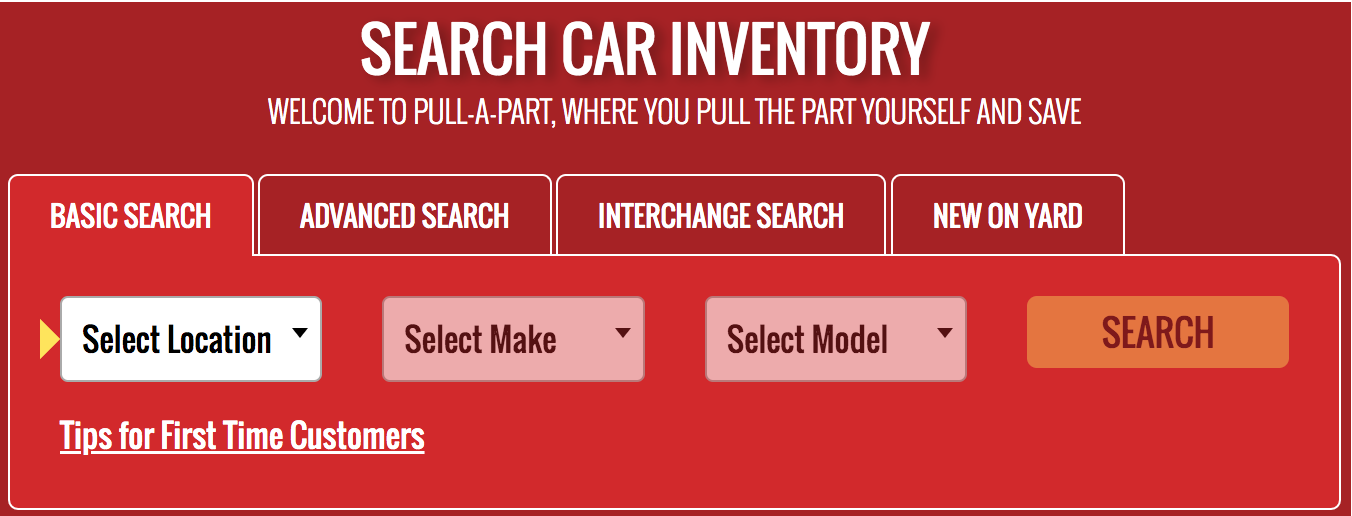
Use an online interchange lookup or the original part number to build a short list of donor vehicles that carry the exact piece you need. U-Pull-&-Pay publishes an online vehicle inventory you can search ahead of time, so you can check which qualifying cars are currently on the lot before you head out. Confirming compatibility on paper first means far less wandering once you arrive.
Pack the Right Tools and Prep Before You Go
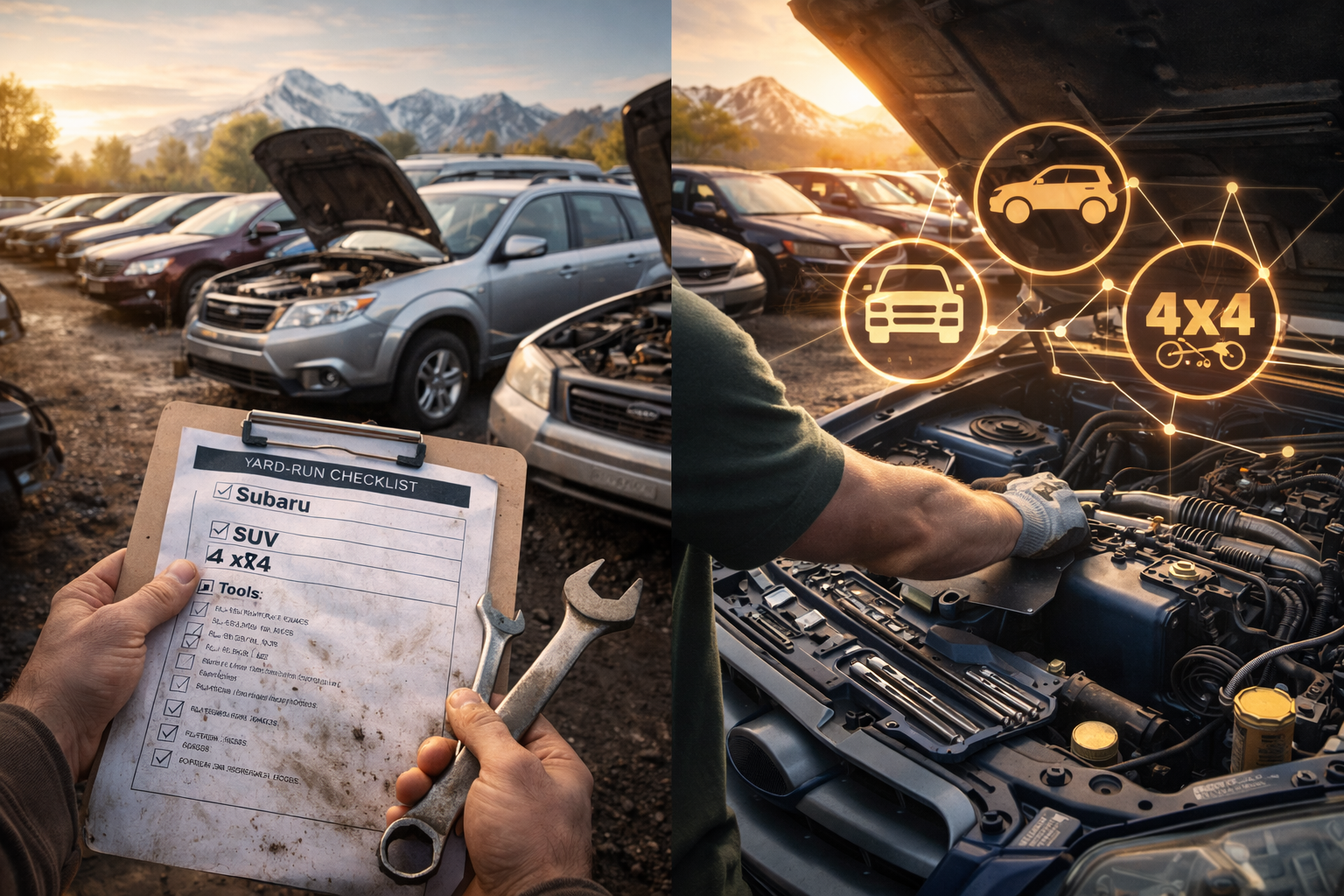
A self-service yard expects you to bring your own tools and do your own removal, so a little preparation prevents a wasted trip. A practical starter kit includes:
- A socket set and a few wrenches in common sizes
- Flathead and Phillips screwdrivers, plus a pry tool for trim and panels
- Pliers and an adjustable wrench for stubborn fasteners
- Penetrating oil for rusted bolts
- Work gloves and safety glasses
- A flashlight or headlamp, and rags or wipes
- A small bin or bag to keep loose hardware together
It helps to read a quick how-to or watch a short tutorial for the specific job ahead of time, especially for anything beyond a bolt-on swap. Knowing roughly how the part comes off, and how many fasteners hold it, lets you work faster and avoid breaking the piece you came for. Wear closed-toe shoes and dress for a working yard rather than a parking lot.
How a Self-Service Visit Usually Works
Most self-service yards organize vehicles by section or by make, so your first move on arrival is to ask staff or check posted signage for where your target cars are parked. Bring your written part list, your interchange notes, and any reference photos. Self-service yards typically price parts from a posted list rather than by haggling, so check the pricing before you start pulling and factor it into whether the repair still pencils out.
You can locate the nearest self-service junkyard through the U-Pull-&-Pay directory, then confirm hours and any entry requirements before you go. Arriving earlier in the day usually means freshly added vehicles and fewer picked-over donors. If you can, bring a second person to help carry heavier components like doors, seats, or compressors.
Inspect Before You Pay
A used part is only a bargain if it works. Take a few minutes to look each piece over on site rather than at the checkout. Watch for these warning signs:
- Cracks, deep gouges, or chips on glass, lenses, and housings
- Heavy rust, corrosion, or pitting on mounting points and electrical contacts
- Bent brackets, stripped threads, or missing fasteners
- Damaged or cut wiring connectors and pigtails
- Signs of prior leaks, overheating, or impact near the part
For mechanical or electrical components, bring a multimeter or a simple tester so you can check basic function before committing. Confirm that small but essential pieces, like mounting brackets, clips, or wiring harnesses, are still attached, since those are easy to overlook and annoying to source separately later.
Knowing When to Repair, Replace, or Move On
Salvage parts make a lot of repairs affordable, but they aren't the answer to every situation. If the running total of parts and labor starts to approach what the vehicle is worth, it may be time to step back and weigh your options. In that case, you might decide to shop for an affordable used car instead of pouring more money into a fading one.
And if the car you've been keeping alive has finally reached the end of the road, it can still have value as a donor. Rather than letting it sit, you can sell your junk car for cash and put that money toward whatever comes next. Knowing when to stop spending is just as much a money-saving skill as knowing where to find a cheap alternator.
The Bottom Line on Junkyard Parts
Used parts from a self-service yard are one of the most dependable ways to keep an older vehicle on the road without overspending. The formula is straightforward: confirm the part fits your exact year, make, model, trim, and engine; check current inventory before you drive out; bring the right tools; and inspect carefully before you pay. Do that, and you'll get reliable repairs at a fraction of retail cost while keeping usable parts in circulation. With a little preparation and patience, a trip to the junkyard becomes a practical, repeatable way to handle your own auto repairs.