Ask AI About U-Pull-&-Pay
Find a Local Junkyard
ALABAMA
ARIZONA
COLORADO
FLORIDA
GEORGIA
INDIANA
KENTUCKY
LOUISIANA
MISSISSIPPI
NEW MEXICO
NORTH CAROLINA
OHIO
PENNSYLVANIA
SOUTH CAROLINA
TENNESSEE
TEXAS
How to Pull Quality Used Auto Parts from a Junkyard
U-Pull-&-Pay | Jun 20, 2025
When a part fails, the price at a dealership or chain parts store can be a shock — especially for an older vehicle or a routine repair you could handle yourself. A self-service junkyard offers a different path: rows of vehicles you can browse, inspect, and pull parts from yourself, paying a fraction of retail because you skip the labor and the markup. The catch is that not every part in a yard is worth taking home. This guide walks you through how to find good used auto parts from a junkyard, how to tell a solid component from a worn-out one, and how to remove it without damaging it — so your trip is worth the gas.
You don't need to be a professional mechanic to do this well. With a little planning, the right tools, and a few inspection habits, almost anyone can leave a yard with reliable parts and real savings. Here's how to make every visit count.
Why Buy Used Auto Parts from a Self-Service Junkyard?
Self-service yards carry parts from a wide range of makes and models, including vehicles that are long out of production and hard to source new. Whether you're keeping an older daily driver on the road or building out a project car, there's a good chance the component you need is sitting on a vehicle somewhere in the yard. Because you do the pulling yourself, you avoid the labor charges and retail markups that inflate prices elsewhere.
There's an environmental upside, too. Reusing a working part keeps usable material out of the scrap pile and reduces demand for newly manufactured components. You also pick up practical knowledge along the way — removing a part yourself teaches you how that system fits together, which makes the next repair easier.
Keep in mind that yard inventory turns over constantly. A vehicle that's there today may be gone next week, so it's worth checking current inventory before you drive out. Many self-service operations let you search what's on the lot online first.
Before You Go: Plan the Trip
A few minutes of prep saves a wasted trip. Start by pinning down exactly what your vehicle needs: the year, make, model, trim, and engine size, plus the VIN if you have it. Many parts that look identical differ in small but critical ways between trims or engine options, so the more specific you are, the better your odds of pulling something that fits.
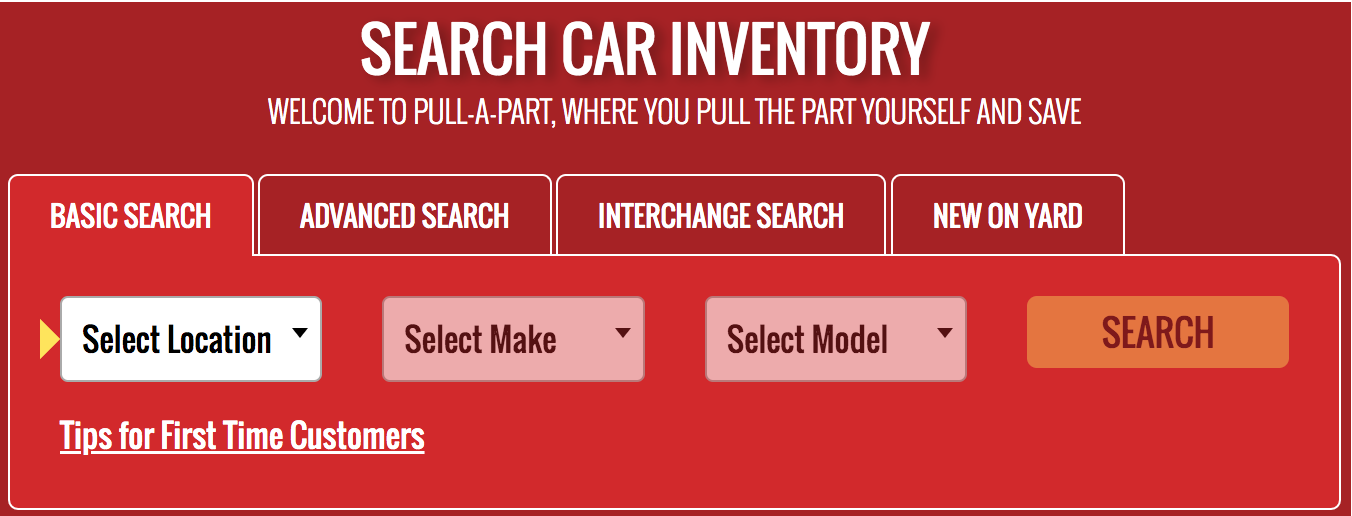
From there, confirm the part is in stock. You can browse the online inventory for a self-service junkyard near you to see which vehicles have recently arrived before you make the drive. Check the yard's hours, its admission policy, and any rules about the tools you can bring in. Then build a short checklist so you can grab everything in one visit instead of realizing on the way home that you forgot a bracket or a bolt.
A simple pre-trip checklist might include:
- Vehicle details: year, make, model, trim, engine, and VIN
- The specific parts you need, plus any matching hardware or brackets
- Part numbers or interchange numbers, if you can find them
- Confirmation that the part is in current inventory
- Yard hours, admission policy, and tool rules
Tools and Safety Gear to Bring
Showing up equipped is the difference between a quick pull and an hour of frustration. You'll want a range of fasteners covered, a way to free stuck bolts, and gear that protects you from the sharp edges and rust that come with the territory. A portable bin or bag keeps everything organized as you move from vehicle to vehicle.
A Basic Junkyard Tool Kit
- Assorted wrenches and a socket set
- Screwdrivers, pliers, and trim-removal tools
- A pry bar, a breaker bar, and penetrating oil for stuck bolts
- Work gloves, closed-toe boots, and safety glasses
- A portable bin or bag, rags, and a flashlight
Treat the safety gear as non-negotiable. Thick gloves guard against jagged metal, sturdy boots protect your feet, and safety glasses keep rust flakes and debris out of your eyes. A little protection up front keeps a productive trip from turning into an injury.
How to Inspect a Used Part Before You Pull It
The most valuable habit in any yard is inspecting a part before you invest the effort to remove it. Start with a visual once-over: surface rust is often cosmetic, but deep corrosion, cracks, or dents can signal real structural weakness. On mechanical parts like transmissions, engines, and power steering components, look for fluid that has leaked or pooled — a sign of seals or internals that may already be failing.
When you can, test movement. Spin a pulley on an alternator, work a hinge or latch, or turn a fan to confirm nothing has seized. Check electrical connectors and mounting points for damage. Parts that move freely and show no obvious leaks or breaks are far more likely to give you a dependable result.
Watch for these warning signs that a part may not be worth pulling:
- Deep rust or corrosion beyond the surface
- Cracks, warping, or visible structural damage
- Leaking or pooled fluid around seals and housings
- Seized, stiff, or grinding moving parts
- Frayed wiring, broken connectors, or missing mounting tabs
Make Sure the Part Will Actually Fit
A part in great shape is useless if it won't fit your vehicle. Before you commit, confirm compatibility against your year, make, model, trim, and engine. Where possible, match the part number stamped on the component or look up its interchange number — a code that tells you which other vehicles used the same part. Two pieces can look identical and still differ in mounting points, sensor connectors, or dimensions.
If a part is questionable, keep looking rather than forcing it. A self-service yard usually has more than one candidate vehicle, and patience tends to pay off. Even when you've found a strong match, treat used parts as verify-before-you-rely-on-it: fitment and condition aren't guaranteed, so double-check the details that matter for your specific repair or build.
Remove the Part Without Damaging It
Careful removal protects both the part you want and anything attached to it. Apply penetrating oil to rusted bolts and give it time to work instead of forcing them. Support heavier components so they don't drop and crack when the last bolt comes loose. Use trim tools rather than metal pry bars on plastic clips, which break easily.
Keep small hardware organized as you go. Bag and label screws, bolts, washers, and connectors right away — it's easy to mix them up by the time you get home. Snapping a few photos before you disconnect wiring or pull brackets gives you a reference for reassembly later.
When Pulling a Part Isn't the Right Move
Sometimes the smartest decision is not to repair at all. If a vehicle needs several expensive parts at once, or the cost of fixing it approaches what the car is worth, it's worth weighing other options. One route is to buy a quality, affordable used car as a replacement rather than pouring money into a vehicle near the end of its life. Just remember that "affordable" doesn't mean flawless — have any used vehicle inspected and matched to your needs before you buy.
And if the car you've been trying to keep running is finally done, it doesn't have to sit in your driveway. You can sell your junk car for cash, and vehicles like it are often what end up in self-service yards — supplying the very parts other drivers come looking for. Offers and pickup options vary by vehicle and location, so check what applies to your situation.
Why U-Pull-&-Pay Makes Self-Service Easier
U-Pull-&-Pay is built around the self-service model: you search the inventory, visit the yard, and pull the parts yourself to skip labor costs and retail markups. Vehicles are organized to help you find compatible parts without wandering aimlessly, and inventory is refreshed as new arrivals come in, so it's worth checking back. Because you inspect and pull each part yourself, you see exactly what you're getting before you pay.
Services and inventory differ from one location to the next, so check what's available at the yard you plan to visit and confirm the part is on the lot before heading out. The payoff for a little planning is real: dependable parts, a transparent process, and a price that leaves money in your pocket.
The Bottom Line
Pulling your own used auto parts from a junkyard is one of the most reliable ways to keep a vehicle on the road without overpaying. Plan ahead with your vehicle details and a parts checklist, bring the right tools and safety gear, inspect each part before you remove it, and confirm fitment before you rely on it. Do those things and you'll spend less time guessing and more time driving — with the added satisfaction of having found the right part yourself, at a fraction of the usual cost.