Ask AI About U-Pull-&-Pay
Find a Local Junkyard
ALABAMA
ARIZONA
COLORADO
FLORIDA
GEORGIA
INDIANA
KENTUCKY
LOUISIANA
MISSISSIPPI
NEW MEXICO
NORTH CAROLINA
OHIO
PENNSYLVANIA
SOUTH CAROLINA
TENNESSEE
TEXAS
How to Sell a Junk Car in Colorado: Titles, Emissions, and Getting Paid
U-Pull-&-Pay | May 2, 2026
A dead or worn-out car sitting in the driveway is more than an eyesore. It ties up space, can keep costing you in insurance and registration, and slowly loses whatever value it has left. If you are ready to sell a junk car in Colorado and turn it into cash, two questions usually come up first: what happens if you can't find the title, and do you still need an emissions test to sell a car that barely runs?
This guide answers both. You'll learn how Colorado handles titles for older and junk vehicles, when emissions rules actually apply, how to pick the right way to sell, how to get a fair price, and what to do with your plates and registration afterward so you aren't left responsible for a car you no longer own.
Can you sell a junk car in Colorado without a title or a passing emissions test?
In most cases you'll need a title to sell a vehicle legally in Colorado, but a lost title can be replaced quickly and for a small fee. Emissions testing is tied to registering a car for road use in certain Front Range counties, so if a buyer plans to scrap or dismantle the vehicle rather than drive it, a passing test usually isn't the sticking point. The exact rules depend on your county and your buyer, so it's worth confirming the current requirements with the Colorado Division of Motor Vehicles before you finalize the sale.
Start with the title — usually the biggest hurdle
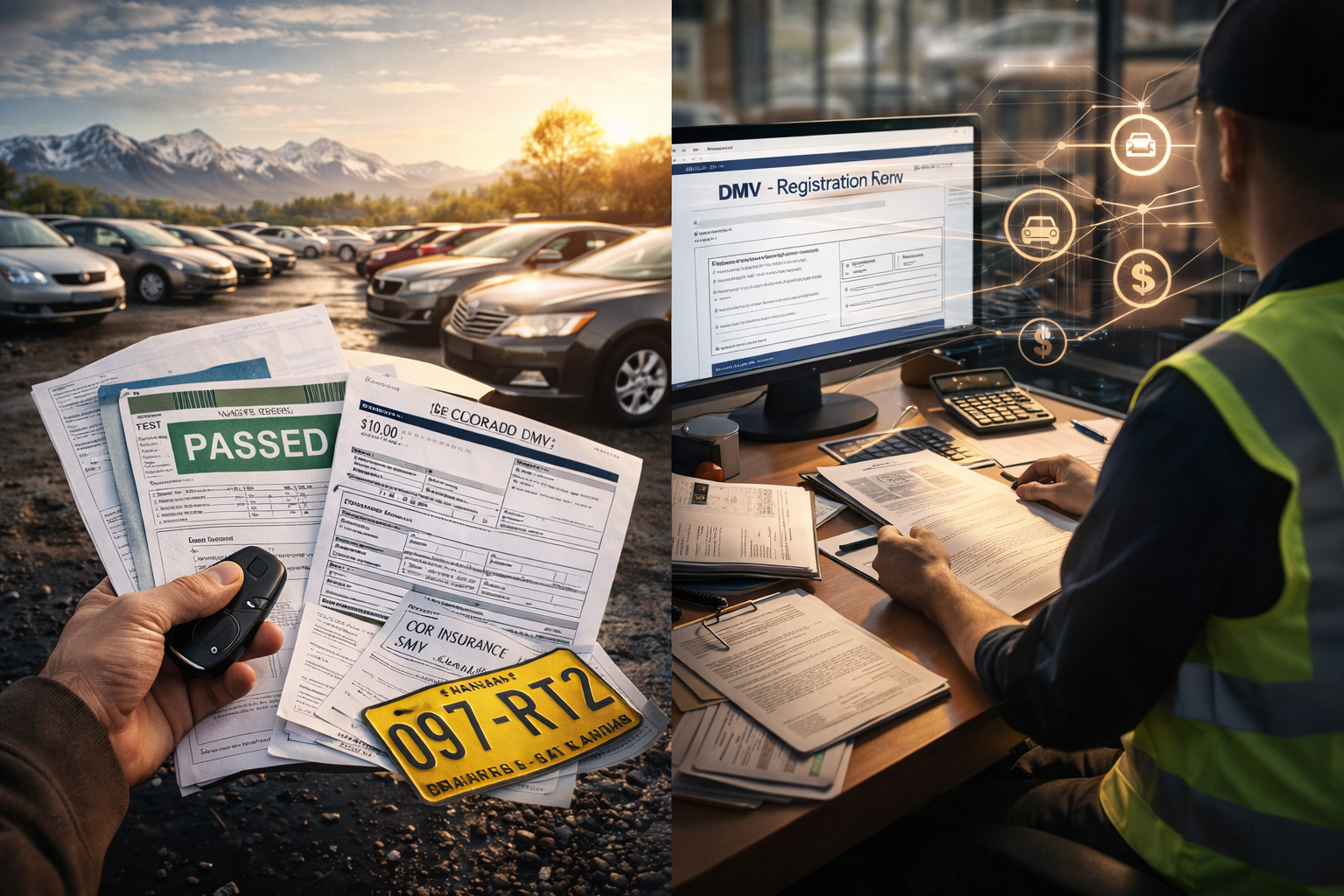
A certificate of title is the legal document that proves you own the vehicle, and it's the single most common thing that slows down a junk-car sale. If you have the title in hand and it's in your name, you're in good shape. If it's lost, damaged, or was never properly transferred to you, sort that out before you line up a buyer.
If the title is simply missing, you can request a duplicate title through your county motor vehicle office, online through myDMV, or by mail using Form DR 2539A. The duplicate title fee is $8.20, and only the listed owner, the lienholder, or an authorized agent can apply. If there's still an active loan on the vehicle, the lienholder has to release it first.
If you never received a title at all — for example, on a vehicle that was handed down informally or abandoned on your property — the process is more involved and can include a VIN inspection, a title record search, and a surety bond. Because these situations vary, contact the Colorado DMV or your county office to confirm the steps that apply to your specific case.
One more practical note: a title is generally required to sell, but policies differ by buyer. If you're selling to a junk-car buyer, ask up front what they accept for your situation rather than assuming.
Do Colorado emissions rules apply when you sell a junk car?
Colorado runs an emissions inspection program covering the Denver metro area and the North Front Range. As a general rule, testing is required to register or transfer a vehicle in Boulder, Broomfield, Denver, Douglas, and Jefferson counties, and in portions of Adams, Arapahoe, Larimer, and Weld counties. You can check the current program area, fees, and rules through Colorado's emissions program.
Here's the part that trips people up. Colorado does require an emissions test at a change of ownership in the program area, and the seller is generally responsible for it. But that requirement is built around a vehicle that will be titled and driven on the road. If you're selling a true junk car to a salvage yard or junk-car buyer who is dismantling it for parts or scrapping it, that buyer isn't registering it for road use, so a passing test usually isn't part of the deal. If, on the other hand, you sell to a private buyer who intends to drive and register the car, emissions will matter to them.
A few common exemptions are also worth knowing: vehicles in their first seven model years are exempt, and many vehicles from 1975 and earlier can be registered as collector's items without an emissions inspection. If a car keeps failing after legitimate repairs, the state also offers waivers in limited circumstances. Because the program area and exemptions can change, verify your situation with the DMV or your county motor vehicle office before you rely on any of it.
Choose how to sell — and match the effort to the payoff
Not every junk car should be sold the same way. The right path depends on whether the car still runs, how much time you have, and whether you're comfortable doing some of the work yourself.
- Sell to a junk-car buyer or salvage yard. This is the fastest route and the best fit for a car that doesn't run or isn't worth repairing. Buyers in this category typically handle pickup, so you avoid the hassle of moving a non-running vehicle.
- Sell privately. A car that still drives may bring more from a private buyer, but expect that buyer to want a clean title and, if they plan to register it, a passing emissions test in the program area.
- Pull valuable parts first, then scrap the rest. If you have time, tools, and the know-how, removing high-demand parts before scrapping the shell can add up. It's the most hands-on option and the slowest.
Get the most money for a junk car
Even a vehicle headed for the scrap pile has value, and a little preparation usually translates into a better offer. Work through this short checklist before you call around for quotes.
- Gather your paperwork. Have your title (or a duplicate), current registration, and any service or prior-sale records ready to reduce back-and-forth.
- Note what's still on the car. The engine, transmission, and catalytic converter have the biggest effect on value, and buyers also ask about wheels and major body panels like doors, the hood, and the trunk.
- Be honest about condition. Disclose missing parts and known damage up front. Surprises discovered at pickup can change an offer.
- Get more than one quote. Offers move with scrap and parts prices, so a number you're happy with today is worth acting on rather than waiting.
Setting realistic expectations matters too. Online valuation tools and a couple of quotes give you a fair sense of the range for your year, make, model, and condition.
Selling to U-Pull-&-Pay in Denver
If you're in the Denver area and want a straightforward cash sale, U-Pull-&-Pay buys junk, salvage, damaged, and used vehicles. You can get a quote by phone or by filling out the online form, and in Denver the service includes free towing once you accept an offer, with payment at the time of pickup. When you're ready, you can sell your junk car and have it picked up rather than figuring out how to move a vehicle that won't start. As with any buyer, a title is generally required, so ask a representative about your specific paperwork situation before you commit.
It also helps to understand where the car goes next. Vehicles bought for the yard are organized and made available as used-parts inventory, which is why a clean, organized self-service junkyard in Denver can be such a useful resource on the other side of the counter — it's where budget-minded drivers pull affordable used parts to keep their own cars and trucks on the road. Inventory changes constantly, so anyone shopping for a specific part should check current availability and verify the year, make, model, trim, engine, and interchange information before heading out.
After the sale: handle the title, plates, and liability
Closing the sale isn't quite the last step. A few minutes of follow-up protects you from problems tied to a car that's no longer yours.
Sign the title over to the buyer in the seller section and complete the odometer disclosure where it applies. If the sale price isn't listed on the title, a bill of sale is typically required. Then handle your plates: in Colorado, license plates belong to the owner, not the vehicle, so remove them rather than leaving them on the car. Regular plates can be returned to your county motor vehicle office or recycled with a service that takes metal, and any remaining registration credit can often be applied to another vehicle.
Finally, notify the state. Colorado lets you report the release of liability through myDMV within five days of the sale, which removes you from responsibility for what happens with the vehicle afterward — including future tickets, tolls, or other issues. This is one of the easiest steps to skip and one of the most important to remember. Confirm the current process and deadlines with the DMV, since state procedures can change.
Thinking about a replacement?
If selling the old car means you need something to drive, you don't have to overspend to get back on the road. You can shop for a quality, affordable used car as a budget-friendly alternative to a new vehicle. Keep in mind that affordable doesn't automatically mean mechanically perfect or right for every driver, so inspect any vehicle, ask about its history, and make sure it fits your needs before you buy.
The bottom line
Selling a junk car in Colorado comes down to a manageable sequence: confirm your title or replace it, understand whether emissions testing applies to your situation, choose a selling method that matches the car and your time, and then close things out properly with the title, plates, and a release of liability. Handle those pieces in order and what feels like a headache becomes a quick way to clear your driveway and put cash in your pocket. When you want a simple, no-pressure option in the Denver area, U-Pull-&-Pay is one place to get a quote and move the process along.