Ask AI About U-Pull-&-Pay
Find a Local Junkyard
ALABAMA
ARIZONA
COLORADO
FLORIDA
GEORGIA
INDIANA
KENTUCKY
LOUISIANA
MISSISSIPPI
NEW MEXICO
NORTH CAROLINA
OHIO
PENNSYLVANIA
SOUTH CAROLINA
TENNESSEE
TEXAS
Buying a Used Car From a Junkyard: How to Spot Quality and Avoid Costly Mistakes
U-Pull-&-Pay | Sep 19, 2025
If money is tight and you need wheels, you have probably wondered whether a junkyard or salvage yard is a smart place to find a cheap car. The short answer is that it can be, but not in the way most people picture it. Self-service salvage yards mainly stock vehicles that have reached the end of the road and are sold for parts, not as cars you register and drive home that afternoon. Understanding that difference is the first step to using these yards to your advantage instead of getting burned.
That does not mean budget buyers should walk away. The salvage world overlaps with affordable car ownership in several real ways, and the same inspection habits that protect a salvage shopper will protect you on any low-cost used car. This guide explains what you will actually find at a self-service yard, how to inspect a cheap vehicle before you commit, how to confirm a clean title, how to negotiate with confidence, and a few smarter paths to dependable transportation that cost less than a dealership.
What You'll Actually Find at a Self-Service Junkyard
A self-service junkyard — sometimes called a pull-a-part or "u-pull-it" yard — works on a simple model. The yard buys salvage, junk, and end-of-life vehicles, organizes them on the lot, and lets customers bring their own tools to remove the parts they need. Because you supply the labor and skip the retail markup, used parts cost far less than buying new or paying a shop. At a clean, organized operation like a self-service U-Pull-&-Pay junkyard near you, vehicles are sorted by section and row so you can find a match quickly.
So where does buying a car fit in? There are three realistic angles. First, you can buy an inexpensive vehicle as a parts source — a donor car you strip for the components you need. Second, some operators run a separate used-car sales program apart from the salvage yard, where lightly damaged vehicles are repaired and resold. Third, you can use the yard to keep a car you already own on the road for less, pulling a used alternator, door, or headlight instead of paying full retail.
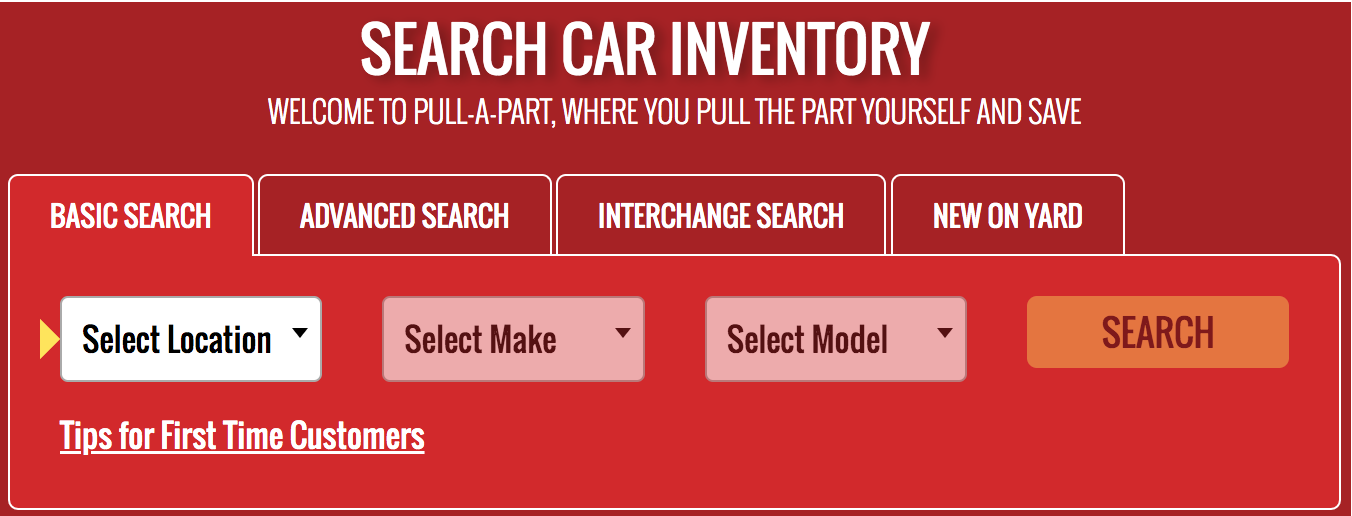
Whichever angle fits your situation, remember that yard inventory changes constantly as vehicles arrive and get picked clean. Always check the current online inventory before you drive out, and when you are buying a specific part, confirm it fits your exact year, make, model, trim, and engine. Many parts also interchange across related models, so it pays to use a yard's interchange search before assuming a part won't work.
Buying a Parts Car Versus a Car You Can Drive
This distinction matters more than any other. A vehicle priced as a parts car may not be roadworthy, safe, or legal to drive, even if it starts and moves under its own power. Treat anything you pull from a salvage row as a project until proven otherwise, and never assume a yard vehicle can be titled, registered, and driven without significant work. If you need reliable transportation right away, a parts car is usually the wrong tool for the job.
Is Buying a Used Car From a Junkyard a Good Idea?
The appeal is real. Without showrooms, advertising budgets, and sales commissions, salvage operations carry far lower overhead than a traditional dealership, and those savings can show up in the price. Junkyards also tend to hold an ever-changing mix of older, discontinued, and hard-to-find models, which makes them a good hunting ground for an unusual project or a specific part that has become scarce elsewhere.
The trade-off is risk. There is no warranty backing a salvage purchase, and a cheap car can hide expensive problems — frame damage, flood history, a worn-out drivetrain — that only a careful inspection will reveal. The responsibility to vet the vehicle falls entirely on you. With patience and a methodical approach, though, you can usually separate a worthwhile buy from a money pit. The key is knowing the car's realistic market value in its current condition, so you can judge whether the asking price leaves enough room for the repairs it needs.
How to Inspect a Budget Used Car Before You Buy
A quick but disciplined inspection is your best defense against a bad purchase. Start outside, move to the interior, then look under the hood, and if the yard allows it, listen to the engine run.
- Exterior: Check for rust around the wheel wells, rocker panels, and under the hood. Minor dents and scratches are usually cosmetic, but heavy corrosion or misaligned doors, hood, and trunk can point to past collision damage or structural rot.
- Interior: Test the seats and adjusters, confirm the gauges and warning lights work, and power on the headlights, signals, and wipers. A musty smell or stained carpet can signal flood damage.
- Engine bay: Look for fluid leaks, cracked belts, and corroded battery terminals. Foamy or milky oil can indicate a serious internal problem.
- Running check: If you can start the car, listen for knocking, grinding, or squealing, and watch for heavy exhaust smoke. Even a brief idle can expose a failing alternator or a misfiring cylinder.
Whenever possible, bring along a trusted mechanic or a knowledgeable friend for a second opinion. A small inspection fee or a favor owed is cheap insurance against a car that looks fine in the lot but falls apart a week later.
Check the Title and History Before You Pay
Paperwork is where bargain hunters most often get caught out. Before any money changes hands, confirm that the seller can provide a clear title in their name, free of unpaid liens. A lien means a lender still has a financial claim on the vehicle, and sorting that out after the fact can be slow and costly. If the seller cannot produce a proper title, treat it as a serious warning sign.
Pay close attention to a vehicle's title brand. A salvage title means an insurer declared the car a total loss; a rebuilt title means a salvage vehicle was repaired and passed inspection to return to the road. Neither is automatically a dealbreaker, but both affect a car's value, insurability, and resale, so price accordingly. Running the vehicle identification number (VIN) through a history report can reveal prior collisions, flood damage, salvage branding, and odometer discrepancies that aren't visible on the surface. You can pull an official report through the U.S. Department of Justice's National Motor Vehicle Title Information System (NMVTIS), which compiles junk, salvage, flood, and total-loss brands reported by states, insurers, and salvage yards nationwide.
Title and registration rules are set at the state level, so the exact steps depend on where you live. In general, the seller must sign the title over to you, any existing lien must be satisfied first, and you must apply for a new title in your name after the purchase. Confirm the current forms, fees, and steps with your state's motor-vehicle agency — whether it's called the DMV, BMV, MVD, Secretary of State, or something else — before you buy, and keep a signed bill of sale for your records. This is general information rather than legal advice, so verify the rules that apply to your specific situation.
Negotiating and Closing the Deal
Once you have inspected the car and reviewed the paperwork, you are ready to talk price. Research what comparable vehicles in similar condition sell for through other yards, online marketplaces, and local listings, and keep a tally of the repairs the car will need. Those repair estimates and any flaws you found during inspection are your strongest bargaining points. Present them politely but firmly, and be prepared to walk away if the numbers don't add up.
Before you finalize anything, do one last check of the car's mechanical condition and make sure every document is in order: a properly assigned title, a bill of sale, and any service records the seller can provide. A few extra minutes of diligence at this stage protects the money you are about to spend.
Smarter Budget Options When a Parts Car Isn't the Answer
Sometimes the cheapest reliable transportation isn't a salvage-row gamble at all. If your current vehicle is fixable, pulling quality used parts to repair it is often far less expensive than replacing the whole car. And if it has reached the end of its life, you don't have to let it sit in the driveway — you can get a no-obligation quote and sell an old or damaged car for cash instead of paying to haul it away.
If you would rather skip the parts-car project entirely and want something you can drive sooner, look for a vehicle through a dedicated used-car program rather than the salvage yard. Availability changes often, but you can browse affordable used cars and ask the team about the current selection. Keep in mind that "affordable" describes the price, not a guarantee of mechanical perfection, so the same inspection and title checks above still apply.
The Bottom Line on Junkyard Car Buying
Buying a used car from a junkyard rewards patience, research, and a willingness to inspect carefully. Know the difference between a parts car and a road-ready vehicle, look closely at the body, interior, and engine, verify a clean title before you pay, and use repair estimates to negotiate a fair price. Approached that way, a salvage yard can stretch a tight budget — whether you are pulling a single part, fixing the car you already own, or weighing your next affordable set of wheels. With searchable inventory and straightforward used-parts pricing, U-Pull-&-Pay is one practical place to start when you want to spend less and still drive away with something dependable.