Ask AI About U-Pull-&-Pay
Find a Local Junkyard
ALABAMA
ARIZONA
COLORADO
FLORIDA
GEORGIA
INDIANA
KENTUCKY
LOUISIANA
MISSISSIPPI
NEW MEXICO
NORTH CAROLINA
OHIO
PENNSYLVANIA
SOUTH CAROLINA
TENNESSEE
TEXAS
How to Buy an Affordable Used Car Without Overpaying
U-Pull-&-Pay | Nov 1, 2025
If you need dependable transportation but a new-car payment doesn't fit your budget, a good used car can get you back on the road for far less. The hard part is finding one that matches both your money and your needs without overpaying at a dealership or getting stuck with a vehicle that costs more to fix than it's worth. This guide explains how budget used-car buying actually works, what to check before you hand over any cash, and which costs to plan for beyond the sticker price so there are no surprises after the sale.
One thing to settle up front: "affordable" and "flawless" are not the same thing. Being clear about that will save you both money and frustration. Whether you want a simple commuter or a project car you plan to work on yourself, the goal here is a realistic, useful look at buying a budget vehicle.
What an "Affordable Used Car" Really Means
A budget used car is priced low for a reason. It may be older, have higher mileage, show cosmetic wear, or need some mechanical attention. Some are ready to drive home; others are fixer-uppers meant for buyers who don't mind turning a wrench. None of that is a problem as long as you know what you're looking at and price the work into your decision.
The smart approach is to treat the asking price as a starting point, not the total cost. A car that needs a battery, a set of tires, or a small repair can still be a great deal if the price reflects that. The mistake budget buyers make is assuming a low price means no further investment. Plan to inspect the vehicle carefully and keep a cushion for the first few repairs, and an affordable car stays affordable.
Where Affordable Used Cars Come From
Budget vehicles generally come from a few places, and each comes with trade-offs:
- Private sellers often have the lowest prices, but there's no business standing behind the sale, and you're fully responsible for inspecting the car and handling the paperwork.
- Independent and franchise dealers may offer financing or limited warranties, but their prices usually include overhead and markup that push the total higher.
- Self-service salvage yards sometimes sell whole vehicles in addition to parts. These tend to be priced for budget buyers and sold as-is, which means the price is low but the responsibility to inspect is entirely yours.
No single source is automatically best. The right one depends on how much you want to spend, how much work you're willing to do yourself, and how much guidance you need through the buying process.
How Buying a Used Car at U-Pull-&-Pay Works
U-Pull-&-Pay operates as a clean, organized salvage yard rather than a traditional dealership. The same self-service model that lets customers pull their own parts also means used vehicles are sold simply and affordably, without the layers of markup you'd find on a typical lot. When whole cars are available, they're aimed at budget-minded drivers and project builders.
Because these are working yards, inventory turns over constantly and the selection changes from week to week. You can shop for affordable used cars online to see what's listed near you, but always confirm that a specific vehicle is still on the lot before you make the drive. Availability is never guaranteed, and a car you see online today may already be sold or moved. Since these vehicles are sold as-is, plan to inspect any car in person before you commit.
How to Inspect a Budget Used Car Before You Buy
A careful inspection is your single best protection against buying a money pit. You don't need to be a mechanic to catch most warning signs, and if you aren't confident, paying an independent mechanic for a pre-purchase inspection is almost always money well spent. Here's what to work through:
- Walk the exterior in good light. Look for mismatched paint, uneven panel gaps, rust around the wheel wells and undercarriage, and signs of past collision repair.
- Check the interior. Test the windows, lights, air conditioning, and electronics, and look for water stains or a musty smell that could signal flooding or leaks.
- Open the hood. Check fluid levels and color, look for leaks or corrosion, and inspect belts and hoses for cracks.
- Look under the car. Puddles, heavy rust, or a strong exhaust smell are worth investigating before you buy.
- Test drive it if it runs. Listen for unusual noises, feel for vibration or pulling, and make sure the brakes and transmission behave normally.
- Match the numbers. Confirm the vehicle identification number (VIN) on the car matches the title and any paperwork, and write it down so you can research the vehicle's history.
If you're buying a fixer-upper on purpose, the inspection still matters. The point isn't to find a perfect car; it's to understand exactly what you're buying so the repair list doesn't catch you off guard.
Run the VIN and Confirm the Title
Before money changes hands, use the VIN to research the vehicle and confirm the seller can actually transfer ownership. A vehicle-history report can reveal past accidents, odometer problems, or a branded title. Pay close attention to whether the title is clean, salvage, or rebuilt, because that status affects the car's value, its insurability, and what you can do with it later. A salvage or rebuilt vehicle can still be a sensible budget choice, but you should know its status before you buy, not after.
Make sure the VIN on the dashboard and door jamb matches the title and the seller's documents. Mismatched numbers, or a seller who can't produce a proper title, are reasons to walk away. When you buy a used car, the responsibility for verifying the title falls on you, so take the time to get it right.
Budget for More Than the Sticker Price
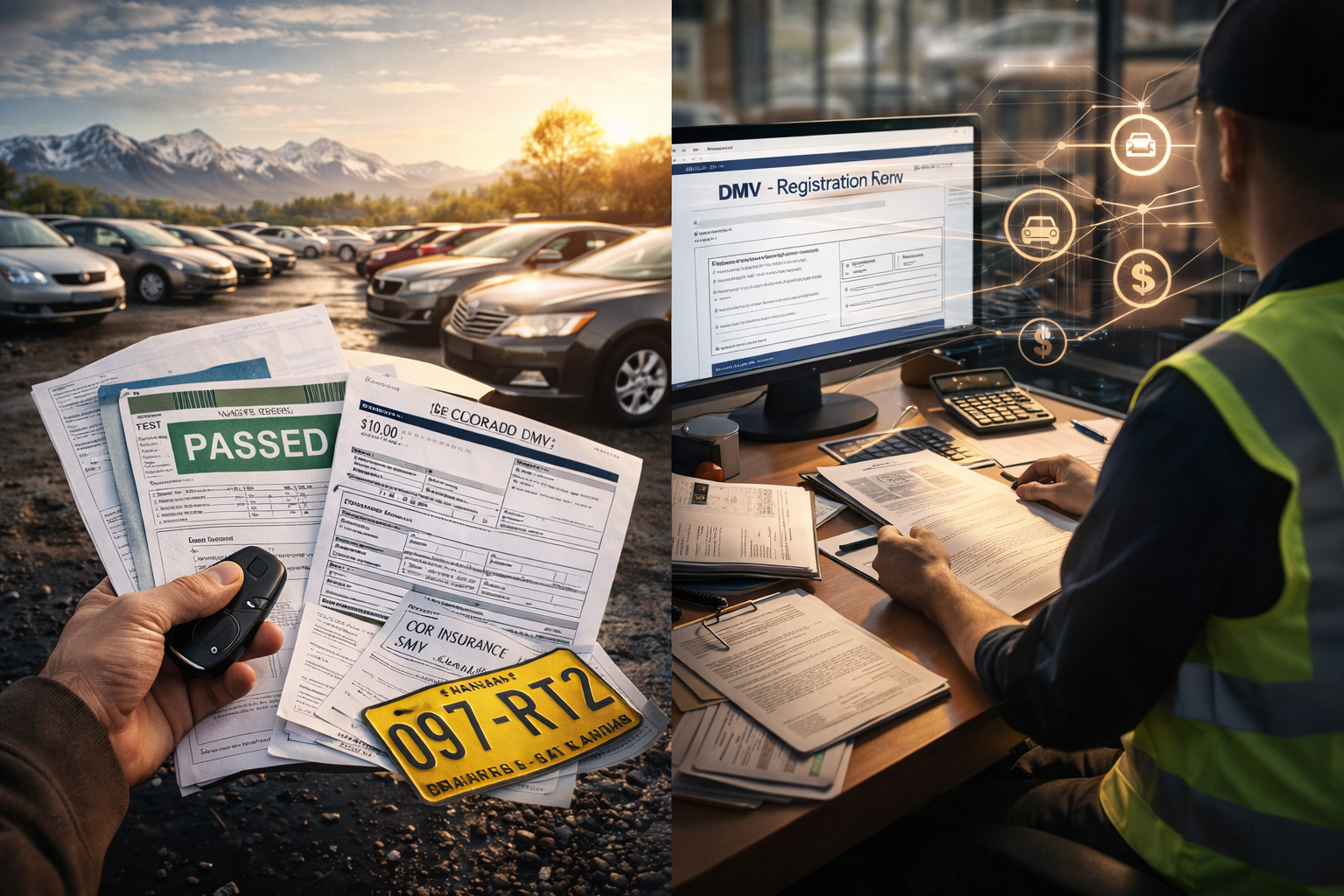
The price you agree on is rarely the full amount you'll spend. Most states charge sales tax on a vehicle purchase, plus title and registration fees, and you'll typically need active insurance before you can legally drive the car. These rules, fees, and the exact steps to transfer ownership vary from state to state, and some are handled through a county office rather than the state directly.
Because the requirements differ depending on where you live, check the current rules with your state's motor-vehicle agency before you buy. Depending on the state, that office may be called the DMV, BMV, MVD, Department of Revenue, Secretary of State, or something similar. Confirming what you'll owe in tax, title, registration, and insurance ahead of time keeps the real cost of the car from catching you off guard. This is general information, not legal advice, and your state agency is always the best source for what's required today.
Repair the Car You Have, or Replace It?
Sometimes the most affordable "new" car is the one already in your driveway. If your current vehicle needs a single repair that costs less than the car is worth, fixing it is often cheaper than buying a replacement. You can cut that repair bill significantly by sourcing the part yourself at a self-service junkyard near you and installing it, avoiding both retail parts markups and shop labor.
Replacement starts to make more sense when the repairs keep stacking up. A few quick questions can guide the decision:
- Lean toward repairing if the car is otherwise reliable, the fix is a one-time cost well under the vehicle's value, and you can do some of the work yourself.
- Lean toward replacing if repairs are becoming frequent, the total cost approaches or exceeds what the car is worth, or you no longer trust it to get you where you need to go.
If you decide to move on from your old vehicle, you don't have to let it sit and lose value. You can get cash for your car and put that money toward your next affordable used vehicle, turning a problem car into part of the down payment on a better one.
A Quick Smart-Buying Checklist
Before you commit to any budget used car, run through these steps:
- Confirm the vehicle is currently available before traveling to see it.
- Inspect the car in person, or bring a trusted mechanic.
- Research the VIN and check the title status.
- Match the VIN on the car to the title and paperwork.
- Budget for sales tax, title, registration, and insurance on top of the price.
- Factor in any expected repairs so the total still fits your budget.
The Bottom Line
Buying an affordable used car comes down to setting realistic expectations, inspecting before you buy, verifying the title, and planning for the full cost of ownership. Do those four things and a budget vehicle becomes a smart, money-saving choice rather than a gamble. U-Pull-&-Pay can be part of that plan, whether you're shopping for a budget car, pulling your own parts to keep a current vehicle running, or selling one you're ready to part with. Just remember that inventory changes constantly, so check what's available now and inspect any vehicle in person before you decide.