Ask AI About U-Pull-&-Pay
Find a Local Junkyard
ALABAMA
ARIZONA
COLORADO
FLORIDA
GEORGIA
INDIANA
KENTUCKY
LOUISIANA
MISSISSIPPI
NEW MEXICO
NORTH CAROLINA
OHIO
PENNSYLVANIA
SOUTH CAROLINA
TENNESSEE
TEXAS
Which Used Auto Parts Are Worth Pulling at a Self-Service Junkyard?
U-Pull-&-Pay | Jan 9, 2026
If a repair estimate has you weighing a used part against a pricey new one, you're asking exactly the right question. Pulling your own part from a salvage vehicle can cut a repair bill dramatically, but only when you choose the right part. Some used auto parts hold up well and save real money, while others cost you more in wasted time and frustration than they're worth.
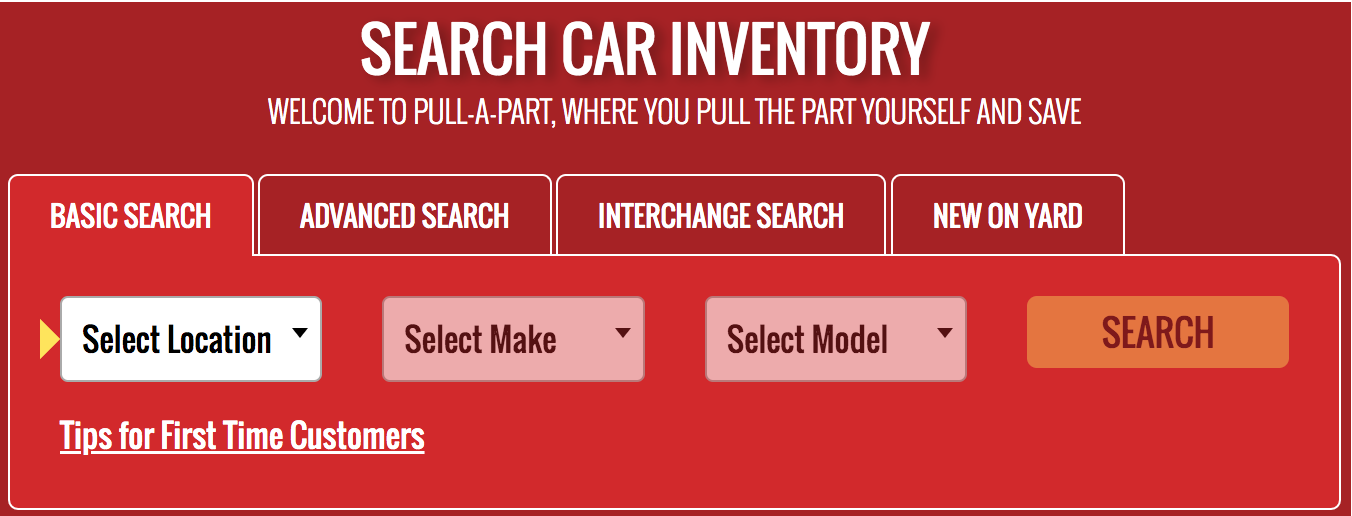
This guide explains which used auto parts are usually worth pulling, which ones deserve a second thought, and how to inspect a part before you ever loosen a bolt. You'll also learn how to confirm that a part will fit your vehicle and how to plan a productive trip so you leave with the part you came for. If you're not sure where to start, you can find a self-service salvage yard near you and check its inventory before heading out.
How a Pull-Your-Own-Parts Yard Works
A self-service yard runs differently from a traditional parts store or repair shop. Instead of paying for labor and retail markup, you search the online vehicle inventory, pay a small admission fee, bring your own tools, and remove the part yourself. Pricing is based on the type of part rather than the specific car it came from, which keeps costs predictable.
The trade-off is that inventory changes constantly as vehicles arrive and get picked clean. A car that was on the lot last week may be gone today, so always check current inventory online before you drive over. The vehicle search and parts interchange tools tell you what's on the yard before you leave home.
Used Auto Parts That Are Usually Worth Pulling
The best candidates for used parts are components that are expensive to buy new, built to last, and easy to inspect for obvious damage. These are the parts where buying salvage makes the most financial sense.
Mechanical and Drivetrain Parts
Major mechanical components carry the highest new-part prices, so a good used unit offers the biggest savings. Engines and transmissions top the list, but only when the donor vehicle was clearly running and the part shows no obvious damage or heavy leaks. Smaller mechanical parts are often a safer bet because problems are easier to spot.
- Alternators and starters
- A/C compressors and power steering pumps
- Engine and transmission accessories such as pulleys, brackets, and covers
Because you usually can't bench-test these on site, check for cracks, leaks, stripped threads, and free movement where the part is meant to spin. If the donor vehicle's mileage is visible, factor it in.
Electrical and Electronic Parts
Modern vehicles are full of motors, sensors, switches, and control modules that are costly new and frequently in good shape in the yard. Window and wiper motors, door lock actuators, switches, sensors, and instrument clusters are common, worthwhile finds. Keep in mind that some control modules need to be programmed or coded to your specific vehicle, so research that step before you count on a plug-and-play swap.
Cooling System Parts
Radiators, A/C condensers, cooling fans, and coolant reservoirs are durable and easy to evaluate by eye. Look for bent fins, clogged passages, cracked plastic tanks, and signs of past leaks. A clean, undamaged unit is often a strong value.
Body, Glass, and Lighting
For cosmetic repairs after a fender bender, salvage is hard to beat. Doors, hoods, fenders, bumpers, mirrors, headlight and taillight assemblies, and glass can all be pulled for a fraction of new prices. Match the color and trim level where it matters, and inspect glass and lenses closely for cracks and clouding.
Used Parts to Think Twice About
Some parts look like a deal but rarely pay off. A few categories are worth approaching with caution.
- Heavily rusted body or structural panels. Surface scuffs are fine, but deep rust usually means more repair work than the savings justify.
- Safety-critical wear items. Brake pads, rotors, worn struts, tired suspension bushings, and aging tires are hard to judge by sight, and their condition directly affects how the vehicle stops and handles. When in doubt, buy these new.
- Rubber and soft parts. Belts, hoses, weatherstripping, and seals degrade with age even when they look intact, so a used one may not last.
- Inexpensive service parts. Filters, spark plugs, wiper blades, and bulbs are cheap new and not worth the hunt.
How to Inspect a Used Part Before You Pull It
A few minutes of inspection in the yard prevents a wasted trip and a part that won't perform. Before you commit to removing something, run through a quick check.
- Look for cracks, leaks, heavy corrosion, and stripped or seized bolts.
- Confirm electrical connectors and wiring pigtails are present and undamaged.
- Spin or rotate any moving part to feel for roughness, binding, or play.
- Note the donor vehicle's mileage if the odometer is readable.
- Compare the part directly to the one it's replacing, ideally by bringing your old part along.
Make Sure the Part Actually Fits
A used part is only a bargain if it bolts onto your vehicle. Fitment usually depends on more than the make and model. The year, trim, engine, transmission, and sometimes specific options or production dates all matter, and parts that look identical can differ in subtle ways. Use the yard's parts interchange search to find every vehicle that may carry a compatible component, and verify the details before you start pulling. No used part is guaranteed to fit, so confirming compatibility up front protects your time and money.
Tips for a Smarter Junkyard Visit
A little preparation turns a long, frustrating walk into a quick, successful one.
- Check the online inventory the morning of your trip, since availability shifts daily.
- Bring the tools you'll need, including penetrating oil for stubborn fasteners, because the yard is self-service.
- Write down the year, make, model, trim, and engine of both your vehicle and any interchange matches.
- Visit during quieter hours for easier access to the vehicles you want.
- Ask staff to help you locate the right section and row using the yard map.
Knowing how pricing works also helps you budget. Parts are priced by category, and asking about admission and any membership savings before you go keeps the trip predictable.
When Buying a Used Part Isn't the Answer
Sometimes the smart move is to step back from the repair entirely. If the cost of parts and your time starts climbing toward what the vehicle is actually worth, it may be time to weigh other options. When a car has reached the end of its useful life, you can sell an unwanted vehicle for cash instead of pouring money into it, and that process is often quick and may include towing depending on the location.
If you need something to drive in the meantime, it may make more sense to shop for a quality, affordable used car rather than rebuild a vehicle that's nearing the end of the road. Just remember that an affordable used vehicle is meant to be budget-friendly, not flawless, so inspect anything you're considering and match it to your real needs.
The Bottom Line
The drivers who get the most out of a self-service yard aren't lucky, they're prepared. They know which used auto parts hold their value, which ones to leave behind, how to inspect a part on the spot, and how to confirm fitment before pulling. Start with the online inventory, bring the right tools and information, and approach each part with a careful eye. Do that, and a self-service salvage yard becomes one of the most reliable ways to keep your vehicle running without overspending.