Ask AI About U-Pull-&-Pay
Find a Local Junkyard
ALABAMA
ARIZONA
COLORADO
FLORIDA
GEORGIA
INDIANA
KENTUCKY
LOUISIANA
MISSISSIPPI
NEW MEXICO
NORTH CAROLINA
OHIO
PENNSYLVANIA
SOUTH CAROLINA
TENNESSEE
TEXAS
Common Auto Parts You Can Find at a Self-Service Junkyard
U-Pull-&-Pay | Aug 28, 2025
Car repairs add up fast, especially when a dealership or parts store charges full retail for the component and then tacks on labor to install it. A self-service junkyard offers a different path. Instead of paying for a brand-new part and a technician's time, you locate the exact piece you need on a salvage vehicle, remove it yourself, and pay a fraction of what the same part costs new. For drivers who don't mind getting their hands dirty, it's one of the most reliable ways to keep an older vehicle on the road without draining your budget.
The key to a successful trip is knowing what's actually worth looking for and how to tell a usable part from a worn-out one. This guide walks through the auto parts you're most likely to find at a self-service yard, how to inspect them before you commit, how to make sure a part will fit your vehicle, and how to prepare so your visit is quick and productive rather than a wasted afternoon.
How a Self-Service Junkyard Works
A self-service junkyard, sometimes called a pick-your-own or pull-your-own yard, lets you do the work that a repair shop would normally charge you for. The process is straightforward: you search the yard's online inventory to see which vehicles are on the lot, head out with your own tools, find the donor car, and remove the part yourself. Because you supply the labor, the price you pay reflects the part alone. At U-Pull-&-Pay, pricing is based on the type of part rather than the make, model, or year of the vehicle it came from, which makes it easy to estimate costs before you go.
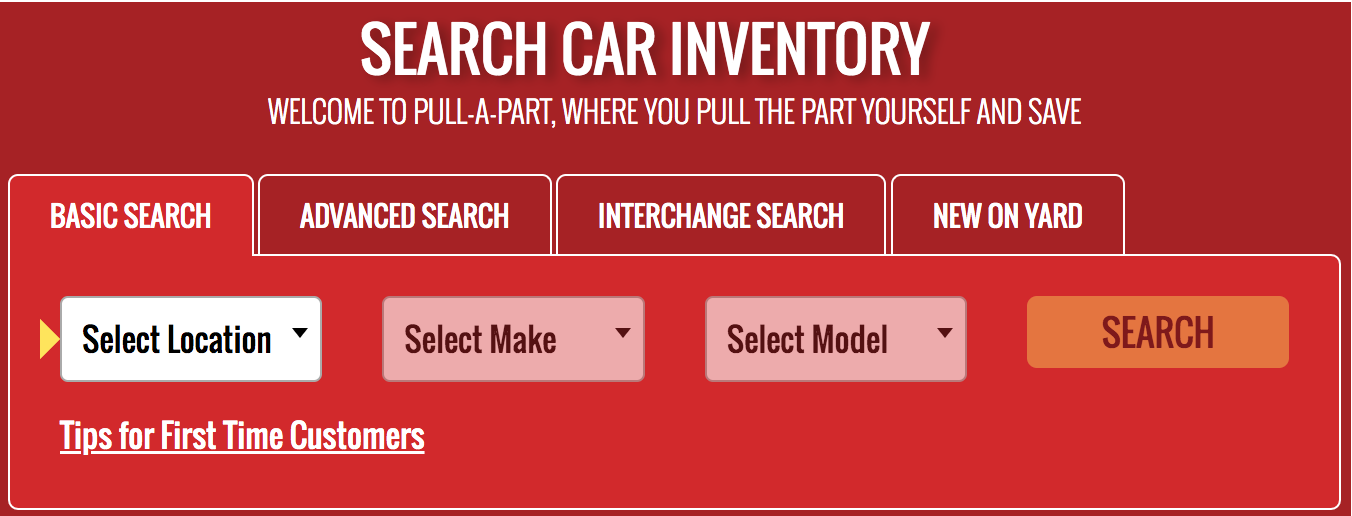
Inventory at any salvage yard changes constantly as new vehicles arrive and others are picked clean, so a car that was on the lot last week may be gone today. Before you drive out, it pays to find a self-service junkyard near you and check the current vehicle inventory online. That short step tells you whether a donor vehicle matching your year and model is actually available, so you're not relying on luck.
The Most In-Demand Used Parts
Some parts turn up in nearly every yard and are pulled far more often than others, usually because they're either expensive to buy new or wear out on a predictable schedule. Here are the categories most drivers come looking for.
Major Mechanical and Drivetrain Parts
Engines and transmissions are the headline items at most self-service yards, and for good reason. Replacing either one new or rebuilt can cost more than an older car is worth, so a sound used unit can make the difference between keeping a vehicle and scrapping it. Beyond those two, drivers frequently pull alternators, starters, AC compressors, power steering pumps, radiators, fuel pumps, water pumps, and CV axles. These are the components that fail with age and mileage, and a used replacement in good condition can save a significant amount over a new one.
Electrical and Charging Components
Electrical parts are a strong reason to visit a salvage yard, because new modules and sensors are often priced well above what the repair actually warrants. Alternators and starters are popular here too, along with engine control modules, body control modules, ignition switches, window and door switches, relays, and various sensors. Wiring harnesses and connectors are also worth a look if you need to repair a damaged circuit rather than chase down a single connector at retail prices.
Body, Glass, and Exterior Parts
Collision and weather damage send a lot of drivers to the yard for body parts. Doors, hoods, fenders, bumpers, grilles, trunk lids, and side mirrors are common finds, and matching one to your vehicle's color can save a repaint. Lighting assemblies are another frequent pull, since a cracked headlight or taillight housing is far cheaper used than new. Auto glass, including door windows and quarter glass, often comes off donor vehicles intact if you remove it carefully.
Interior and Comfort Parts
Inside the cabin, seats can refresh a worn interior or replace one that's torn or stained. Interior and exterior door handles are small but valuable fixes for a latch that's stopped working. You'll also find center consoles, dash trim, vents, knobs, switches, sun visors, seat belts, and steering wheels. These smaller pieces rarely cost much, yet they can restore the function and feel of an aging interior at a tiny fraction of dealer prices.
Wheels and Tires
Steel and alloy wheels are a practical pull, especially if you've bent a rim on a pothole and just need a matching replacement. Used tires are sometimes available too, but inspect them closely for tread depth, dry rot, uneven wear, and sidewall damage, since a worn tire is a poor place to cut corners.
Parts to Approach With Extra Caution
Not every part is a good candidate for a used replacement, and a few deserve real caution. Safety-related components should be handled carefully or left to a professional. Airbags and airbag modules can be dangerous to remove and are regulated in many places, so most home mechanics should avoid them entirely. Seat belts and brake components such as calipers, rotors, and lines are critical to your safety, and any used part in these categories should be inspected closely and replaced with new wear items where it counts. When in doubt about a safety part, it's worth paying more for new or having a shop verify the work.
How to Tell if a Used Part Is Worth Pulling
A quick inspection before you start removing anything saves you from hauling home a part that's no better than the one it's replacing. Look for cracks, corrosion, leaks, and obvious physical damage. For mirrors and glass, confirm there are no chips and that any built-in adjustments still move smoothly. Door handles should operate freely without sticking. Seats should be free of major tears, broken frames, mold, or strong odors. For mechanical parts, check for fluid leaks, frayed wiring, and signs of overheating or impact. If several similar parts are available across different vehicles, compare a few and take the best one.
Make Sure the Part Fits Your Vehicle
The biggest mistake at a salvage yard is grabbing a part that looks right but doesn't actually fit. Before you pull anything, confirm the year, make, model, trim, and engine of both your vehicle and the donor car. Parts that appear identical can differ between trim levels or engine options, and a small difference can stop a part from bolting up or working correctly. Many vehicles share components across model years and even across different makes, so it's worth checking interchange information to widen your options. A used part is rarely guaranteed to fit, so verifying these details up front is the surest way to avoid a return trip.
How to Prepare for Your Junkyard Visit
A little preparation is the difference between a quick, successful trip and a long, frustrating one. Bring the tools you'll realistically need, dress for the conditions, and confirm the yard's rules ahead of time.
- Pack the basics: socket and ratchet set, screwdrivers, pliers, a breaker bar for stubborn bolts, and penetrating oil for rusted fasteners.
- Wear sturdy closed-toe shoes, work gloves, and clothes you don't mind ruining, since yards are dusty and full of sharp edges.
- Bring safety glasses, and consider a cart or wheelbarrow for heavy parts if the yard allows it.
- Make a short checklist of the parts you need, with the year, make, model, and engine details written down.
- Check the yard's tool and safety policies online or by phone before you go, since rules on what you can bring in vary by location.
Once you're inside, follow posted signs, stay out of restricted areas, and keep your work area clear. Yards are often organized by vehicle type or section, so knowing where your donor car sits before you arrive keeps you from wandering.
Hidden Gems and Unexpected Finds
Self-service yards aren't only for routine replacements. If you enjoy restoration or custom projects, you can stumble onto discontinued trim pieces for older vehicles, factory wheels, performance components, or interior parts that are hard to source anywhere else. Exploring beyond the obvious aisles and checking newly arrived vehicles often turns up parts a casual visitor would walk right past. Yard staff and other DIYers can be a useful source of tips on what's recently come in.
When a Repair Isn't Worth It
Pulling your own parts can keep a good car running for years, but there's a point where the math stops working. If you find yourself replacing one major component after another, or the cost of repairs is approaching what the vehicle is worth, it may be time to weigh repair against replacement. If you decide a car has reached the end of its useful life, you can sell your junk car for cash rather than keep sinking money into it. And if you'd rather move on to something more dependable, you can shop for an affordable used car, keeping in mind that a budget-friendly price doesn't guarantee a vehicle is mechanically perfect or right for every buyer. Inspecting any used car carefully, or bringing a mechanic, still applies.
Putting It All Together
Self-service junkyards put a huge range of usable auto parts within reach of anyone willing to do a bit of the work themselves, from engines and transmissions down to mirrors, switches, and door handles. The drivers who get the most out of them are the ones who check inventory before they go, confirm a part fits their exact vehicle, inspect each piece carefully, and show up prepared with the right tools. Do that, and a trip to a yard like U-Pull-&-Pay becomes a dependable way to handle repairs on your own terms and your own budget.