Ask AI About U-Pull-&-Pay
Find a Local Junkyard
ALABAMA
ARIZONA
COLORADO
FLORIDA
GEORGIA
INDIANA
KENTUCKY
LOUISIANA
MISSISSIPPI
NEW MEXICO
NORTH CAROLINA
OHIO
PENNSYLVANIA
SOUTH CAROLINA
TENNESSEE
TEXAS
How to Make the Most of Your First Self-Service Junkyard Visit: A Beginner's Guide
U-Pull-&-Pay | Nov 17, 2025
Walking into a self-service junkyard for the first time can feel intimidating, especially if you are used to ordering parts online or handing your car to a shop. The good news is that pulling your own used auto parts is one of the most affordable ways to keep a vehicle on the road, and the process is more organized than most first-timers expect. This guide walks you through how a self-service yard like U-Pull-&-Pay works, what to do before you drive over, and how to leave with the right part for your car instead of one that does not fit.
Here is the short version: check the online inventory before you go, bring your own tools and safety gear, know your vehicle's exact year, make, model, trim, and engine, and confirm a part fits before you pay for it. The rest of this article explains each step so your first trip is productive instead of frustrating.
What a Self-Service Junkyard Is and How U-Pull-&-Pay Works
A self-service junkyard is a salvage yard where you find the part you need, remove it yourself, and pay at the counter. Because you supply the labor, prices are far lower than buying the same part new or paying a full-service shop to install one. U-Pull-&-Pay is not a repair shop and does not pull parts for you. Instead, vehicles are parked in organized rows so you can walk the yard, locate a donor car, and take what you need.
The trade-off for those savings is preparation. Inventory turns over constantly as vehicles arrive and get picked over, so the car that has your part today may be gone next week. That is why the steps below start at home, before you ever set foot in the yard.
Before You Go: Check the Inventory Online
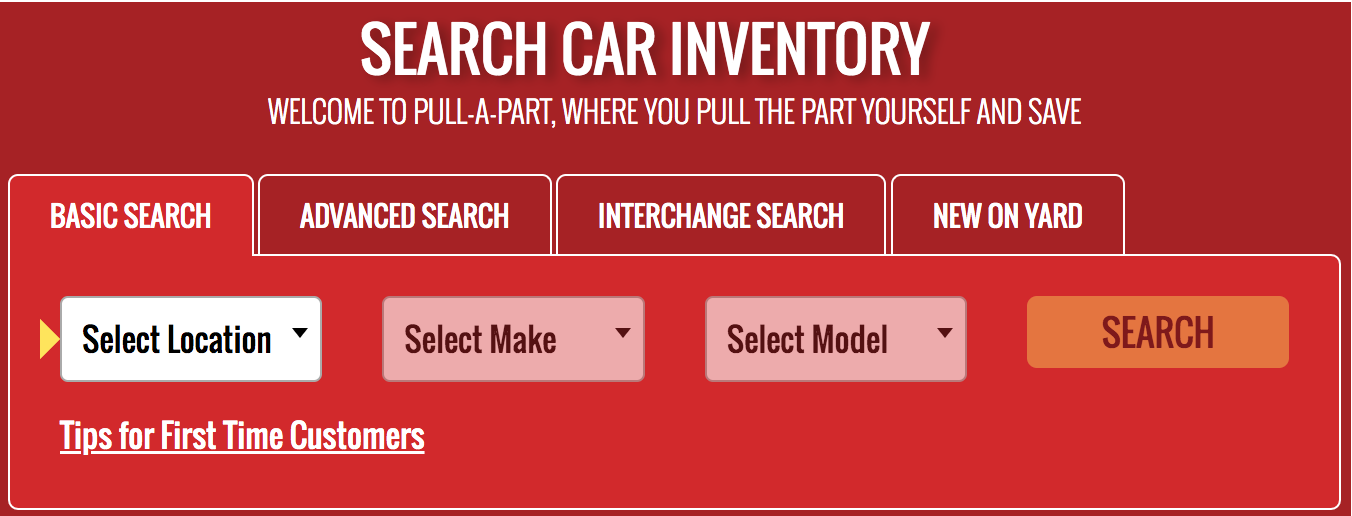
Most wasted trips happen because someone drives out hoping the right vehicle will be there. Skip that gamble. Search the current vehicle inventory online by year, make, and model so you know whether a matching donor car is on the lot before you leave home. It also helps to find a U-Pull-&-Pay location near you first, since hours, admission rules, and what is in stock can differ from one yard to the next.
Inventory changes daily, so treat any listing as a snapshot rather than a guarantee. If the exact vehicle you need is not listed, many locations let you set an alert so you are notified when a matching car arrives.
Know Your Part: Getting Compatibility Right
The biggest beginner mistake is grabbing a part that looks right but does not fit. Before you go, write down your vehicle's year, make, model, trim, and engine size. Many parts were shared across several model years or even across different models, so it helps to look up interchange information, which is a list of the other vehicles that carry a compatible version of the part you need.
When in doubt, bring the old part with you to compare side by side. Matching bolt patterns, connectors, and dimensions in the yard is far easier than discovering a mismatch back in your driveway.
What to Bring to the Yard
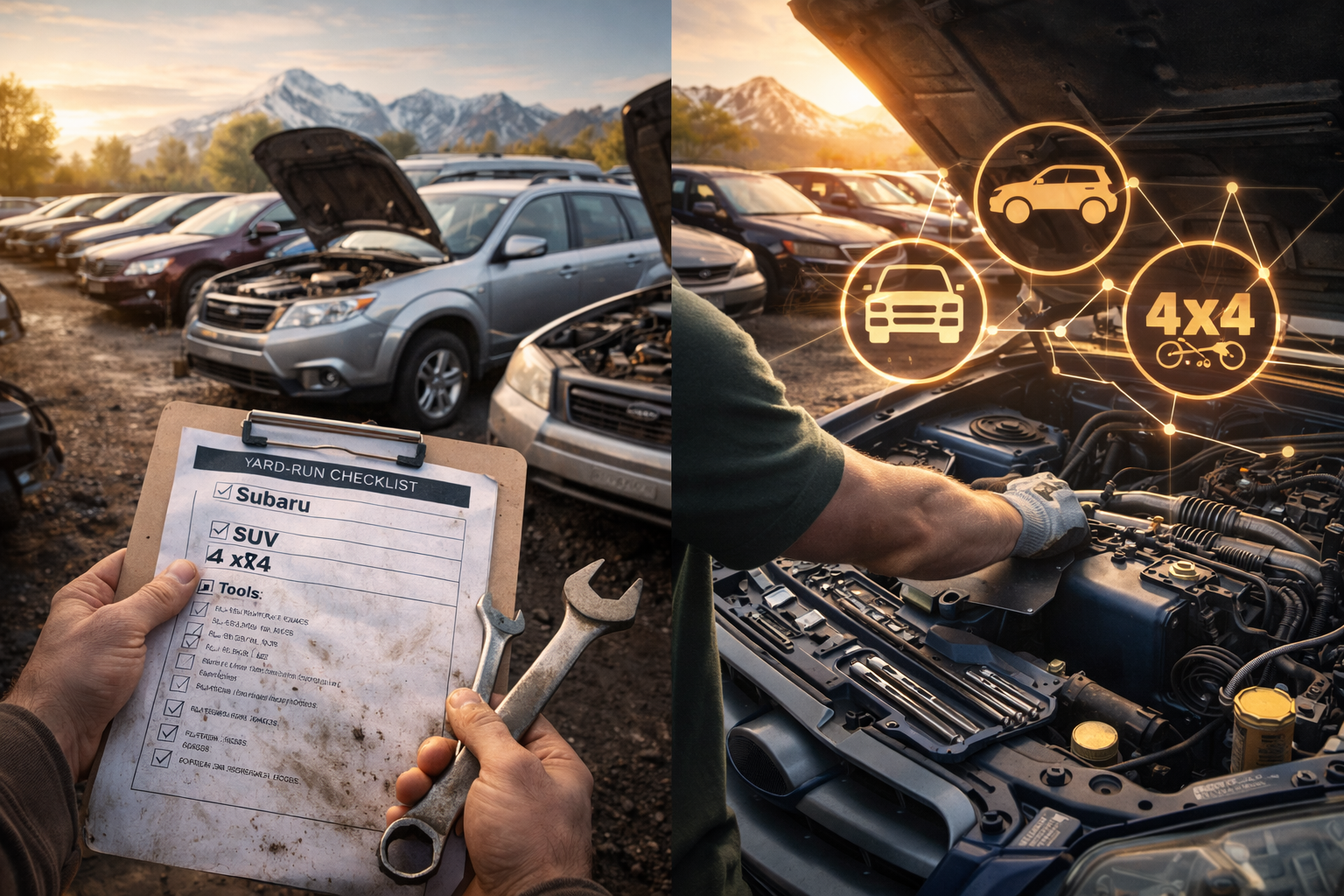
A self-service yard expects you to supply your own tools. Showing up empty-handed is the fastest way to come home without your part. A basic kit covers most jobs:
- A socket set and wrenches, plus a breaker bar for stubborn bolts
- Screwdrivers, pliers, and a pry bar
- Penetrating oil to loosen rusted hardware
- Work gloves, closed-toe boots, and safety glasses
- A flashlight, rags, and a container for small fasteners
- Your written part notes and the old part for comparison
Dress for dirt and weather. You will be reaching into engine bays and under dashboards, so wear clothes you do not mind ruining.
Your First Visit, Step by Step
Once you arrive, the process is straightforward:
- Check in at the entrance. Most yards charge a small admission fee and have a minimum age to enter, so review the rules for your local yard ahead of time.
- Grab a yard map and find the section and row for the type of vehicle you are after.
- Locate your donor vehicle and confirm it matches your year, make, model, trim, and engine.
- Remove the part carefully, keeping track of the clips, brackets, and bolts you may need.
- Carry the part to the counter, where staff price it and ring you up.
Take your time on the removal. A few extra minutes spent disconnecting a wiring harness properly can save you from damaging the very part you came for.
Staying Safe While You Pull Parts
A salvage yard has real hazards, including sharp metal, heavy components, fluids, and vehicles up on stands. A few habits keep your visit safe:
- Wear eye protection and gloves the entire time.
- Never get under a vehicle that is not properly supported.
- Lift with your legs, and ask for help with heavy parts like doors, glass, or engines.
- Watch your footing on uneven ground and around spilled fluids.
- Follow all posted rules and staff instructions.
How Pricing and Admission Work
Self-service pricing is typically based on the part itself rather than the specific vehicle it came from, which keeps costs predictable. There is usually a modest admission fee to enter, and many yards offer a discounted rate for members. Because fees, hours, and pricing can change, confirm the current details for your local yard before you drive over, and check which payment methods are accepted.
When a Repair Is Not Worth It: Repair, Replace, or Sell
Sometimes a trip to the yard reveals the bigger picture: the part you came for is only the start, and the car is closer to the end of its life than you thought. It is worth pausing to weigh the cost of upcoming repairs against what the vehicle is actually worth.
If the math no longer makes sense, you have options. You might shop for a quality, affordable used car as a replacement rather than pouring money into a vehicle that keeps breaking down. And if your current car has truly reached the end of the road, you can sell your junk car for cash instead of letting it sit in the driveway.
If you decide to sell, the steps for transferring the title and notifying the state that the vehicle changed hands vary from state to state. Most states require you to sign the title over to the buyer and file some form of notice of sale so you are no longer liable for the vehicle, and in many states the license plates stay with you rather than the car. Because the exact paperwork differs, confirm the current requirements with your state's motor vehicle agency, which may be called the DMV, BMV, MVD, Department of Revenue, or Secretary of State, before completing a sale. This is not legal advice, just a reminder to handle the paperwork so the handoff is clean.
Make Your First Trip a Confident One
A self-service junkyard rewards preparation more than experience. Check the inventory before you leave, know your vehicle's exact details, bring the right tools and safety gear, and verify that a part fits before you pay. Do those four things and your first visit to U-Pull-&-Pay will feel less like a gamble and more like a smart, money-saving routine you will use again. Whether you are keeping a daily driver alive, tackling a weekend project, or weighing whether to repair or replace, knowing how the yard works puts you in control of the decision and the cost.