Ask AI About U-Pull-&-Pay
Find a Local Junkyard
ALABAMA
ARIZONA
COLORADO
FLORIDA
GEORGIA
INDIANA
KENTUCKY
LOUISIANA
MISSISSIPPI
NEW MEXICO
NORTH CAROLINA
OHIO
PENNSYLVANIA
SOUTH CAROLINA
TENNESSEE
TEXAS
Junkyard vs. Mechanic Costs: A DIY Car Repair Savings Guide for Florida Drivers
U-Pull-&-Pay | Jan 16, 2026
That moment when the repair estimate lands and the number is higher than you hoped is one most drivers know well. A failing alternator, a cracked side mirror, or a worn-out window regulator can climb into the hundreds once a shop adds parts and labor together. If you are willing to turn a wrench yourself, a self-service junkyard can take a real bite out of that bill, and across Florida that often means pulling the part yourself at a U-Pull-&-Pay yard.
This guide explains where your repair money actually goes, how the cost of a used part you pull yourself compares to paying a mechanic, and which jobs are realistic to tackle on your own. You will also learn how a pull-your-own-parts yard works, how to confirm a part will fit before you remove it, and how to recognize the point where fixing the car no longer makes financial sense.
Why Car Repairs Cost What They Do
A repair bill is really two costs stacked on top of each other: the part itself and the labor to install it. At a repair shop, new or dealer parts usually carry a retail markup, and the labor is billed by the hour at the shop's posted rate. On many common wear items, the labor to remove and replace the part costs as much as or more than the part. That is why a job that sounds small on paper can still produce a surprising total.
A self-service yard chips away at both numbers at once. You buy a used part for a fraction of what a new one costs, and because you remove and install it yourself, the labor charge drops to nothing. In other words, you trade your own time and effort for the savings. The bigger the labor portion of a repair, the more there is to gain by doing it yourself.
Junkyard vs. Mechanic Costs: Where the Savings Come From
Comparing the two paths side by side makes the difference easier to see. The savings are real, but they are not free, so it helps to weigh every factor honestly before you decide.
- Parts price: A mechanic typically installs new or remanufactured parts at retail prices, while a salvage yard sells used parts pulled from real vehicles at a much lower cost.
- Labor: Shop labor is billed hourly and adds up fast on jobs that take time, whereas pulling and installing the part yourself removes that charge entirely.
- Diagnosis: A shop can tell you what is wrong, sometimes for a diagnostic fee, but the do-it-yourself route assumes you already know which part has failed.
- Warranty and returns: Shop-installed parts often come with a warranty, while used parts are generally sold as-is, so you carry the responsibility of inspecting them first.
- Tools and time: A mechanic supplies the equipment and the hours; on your own, you provide both, plus a weekend afternoon and some patience.
The takeaway is simple. The more a repair leans on expensive labor and an easily replaced part, the more a self-service yard saves you. For complex work that demands special equipment or a high margin for error, the gap narrows and a professional may still be the smarter call.
Which Repairs Are Worth Doing Yourself
Plenty of repairs are well within reach for a careful owner with basic hand tools. Bolt-on parts that come off with a few fasteners are the bread and butter of a junkyard run.
- Body and exterior pieces such as mirrors, door handles, bumpers, grilles, headlight and taillight assemblies, and trim panels
- Interior items like seats, switches, knobs, sun visors, and trim
- Bolt-on mechanical parts such as alternators, starters, window regulators, fuel doors, and wheels
Some jobs are better left to a professional, both for safety and because they call for tools and training most home garages do not have. Treat the following as a list of warning signs that a repair belongs with a pro.
- Airbags and other supplemental restraint system components
- Brake hydraulics or steering work, if you are not fully confident in the procedure
- Anything involving air-conditioning refrigerant, which requires certified equipment and handling
- Repairs that need a scan tool to program or relearn a module
- Internal engine or transmission work, or any job where you cannot safely raise and support the vehicle
How a Self-Service Junkyard Works
The self-service model is straightforward once you know the routine. U-Pull-&-Pay is what some people call an "un-junkyard," meaning the lot is organized by sections and rows so you can find vehicles without wading through chaos. Here is the basic process from your couch to the counter.
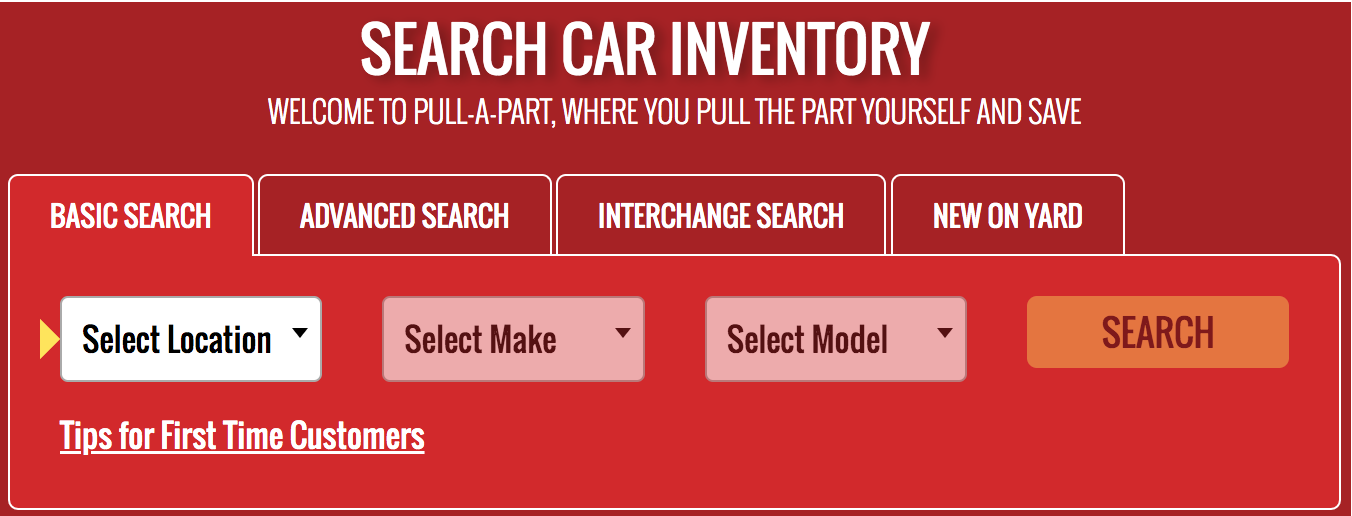
- Search the online inventory for your year, make, and model before you leave home.
- If the vehicle is not listed yet, use the parts interchange tool to find other models that may carry a compatible part, or set up a free alert so you hear when a match arrives.
- Check current inventory close to your visit, since the yards take in new vehicles regularly and stock changes quickly.
- Bring your own tools, gloves, and something to carry parts, and plan to pay a small admission fee at the gate (you must be at least 16 to enter the yard).
- Use the posted yard map and row numbers to locate the vehicle, pull the part you need, and pay for it by the part at the store.
U-Pull-&-Pay runs self-service yards across Florida, so you can plan a visit to the one nearest you in Orlando, Fort Myers, or West Palm Beach and check the current vehicle search before you make the drive.
Make Sure the Part Fits Before You Pull It
Used parts only save money if they actually work on your car, so a little homework up front prevents a wasted trip. Match the year, make, model, trim, and engine as closely as you can, because a part that looks identical can differ between submodels or engine options. The interchange search exists for exactly this reason: it shows which other vehicles share a compatible part, which widens your odds of finding what you need.
Before you remove anything, inspect it the way you would inspect a part you were buying outright. Look for cracks, corrosion, heavy wear, leaking seals, or damaged connectors, and compare it against the worn part you are replacing whenever possible. Because used parts are sold as-is, that inspection is your responsibility and your best protection. Bringing your old part along to hold up against a candidate is one of the simplest ways to avoid a mismatch.
When Repair No Longer Makes Sense
Sometimes the most budget-conscious move is to stop pouring money into a car. A common rule of thumb is that when a single repair approaches or exceeds what the vehicle is actually worth, or when repairs keep stacking up month after month, replacement deserves a serious look. Pulling your own parts stretches a car's life cheaply, but it does not turn an unreliable vehicle into a reliable one.
If you reach that point, selling the car for cash is often easier than another round of fixes. In Florida, the seller must transfer the title to the buyer and file a Notice of Sale so you are no longer liable for the vehicle once it changes hands; you can review the current steps through the Florida Department of Highway Safety and Motor Vehicles. Because these requirements can change, it is worth confirming the latest details before you finalize anything. U-Pull-&-Pay also buys older, damaged, and junk vehicles, so if your car has reached the end of the road you can sell your junk car for cash at the Orlando, Fort Myers, or West Palm Beach yard and put the proceeds toward whatever comes next.
If you would rather replace the car than repair it, you can also shop for a budget-friendly used car in Orlando, Fort Myers, or West Palm Beach when one is in stock. Used-car availability changes, and an affordable price does not guarantee a vehicle is right for every buyer, so inspect anything you are considering and verify its condition before committing.
The Bottom Line
The choice between a junkyard part and a mechanic is really a choice about how you spend your money and your time. For straightforward, bolt-on repairs, pulling a used part yourself can shrink a triple-digit bill into something far more manageable, while jobs that involve safety systems or specialized tools are usually worth a professional's hands. Knowing which is which, and checking fitment before you pull, is where the real savings live. When a car is finally past saving, selling it or finding an affordable replacement keeps you on the road without draining your wallet, and a self-service yard can help with all three.